

Bilateral Renal Artery Stenosis Prevalence and Clinical Outcomes: A Systematic Review and Meta-Analysis
Abstract
Objective : This paper examines the prevalence and clinical outcomes of bilateral renal artery stenosis. Conducting a systematic review and meta-analysis enables a thorough assessment of bilateral renal artery stenosis. The objective of this paper is to determine the prevalence of bilateral renal artery stenosis compared with unilateral renal artery stenosis, and to conduct exploratory analyses of clinical outcomes, including the odds of mortality with revascularization therapy and heart failure hospitalization.
Methods : Six studies published on academic databases were analyzed and used in this analysis. A random-effects meta-analysis of proportions was performed, subgroup analyses were conducted based on stenosis severity thresholds, sensitivity analyses, and exploratory analyses of clinical outcomes such as mortality and heart failure hospitalization were completed.
Results : The meta-analyses showed that the pooled prevalence of bilateral RAS was 6.2% (95% CI: 1.8%-18.7%) with high heterogeneity (I 2 = 98.4%). Including sensitivity cohorts increased the prevalence to 7.7% (95% CI: 1.1%–37.9%), with high heterogeneity. Subgroup differences were not statistically significant (p = 0.075).
Conclusion : The prevalence of bilateral renal artery stenosis is low but highly variable, limiting generalizability. Improved clinical outcomes with revascularization are limited and require further research.
Keywords
Bilateral renal artery stenosis, Bilateral renovascular disease, Prevalence, Renal artery stenosis
Introduction
Renal Artery Stenosis (RAS) is defined by the narrowing of the renal artery and can present as unilateral or bilateral. The two major causes of RAS are atherosclerotic disease, the most common and commonly affecting older adults with generalized vascular disease, and fibromuscular dysplasia, which can affect younger individuals [1]. Renal artery narrowing reduces kidney perfusion and activation of the renin-angiotensin-aldosterone system (RAAS). Activation of the RAAS leads to a cascade of effects that cause hypertension by increasing renin, angiotensin II, and aldosterone. Renin is the rate-limiting step in the RAAS cascade and directly converts angiotensinogen to angiotensin I, which is then converted to angiotensin II. Angiotensin II acts as a vasoconstrictor, increasing systemic vascular resistance and raising blood pressure. Aldosterone acts on the kidneys to promote sodium and water retention and increase blood volume [2].
Renal artery stenosis is a complex disease, and bilateral renal artery stenosis is even more complex. In unilateral RAS, the healthy kidney tries to compensate for the sodium and water imbalance, but over time, the continuous activation of RAAS leads to systemic hypertension and structural damage to the bilateral kidneys [3]. Bilateral RAS causes volume-dependent hypertension because narrowed arteries reduce blood flow to both kidneys, triggering RAAS activation in response to low systemic blood pressure. Both kidneys continue to receive decreased pressure due to the stenosis, leading to uncontrolled aldosterone and fluid overload. The chronic activation of RAAS becomes dependent on volume expansion to maintain the pressure and can manifest as drug-resistant hypertension or flash pulmonary edema [4].
Unilateral RAS likely affects less than 1% of patients with mild hypertension, but may present in 10% to 40% in patients with acute, severe, or refractory hypertension [1]. In higher risk populations, such as those undergoing routine cardiac catheterization, unilateral RAS was observed in 4.2% of patients and bilateral was present in 1.4% [5]. The prevalence of unilateral and bilateral RAS can vary depending on the population observed, the methods used, and the other comorbidities that patients present with.
The objective of this paper is to use meta-analysis to determine the prevalence, causes, and management of bilateral RAS. A literature review was conducted to identify studies on the prevalence of bilateral RAS and its management. The review found 6 studies published between 2001 and 2023 that researched the prevalence of bilateral renal stenosis, as well as the most common risk factors and sequelae of the disease. The results of this paper and a discussion of future research topics on bilateral RAS are presented later in this paper.
Methods
Literature review
A comprehensive search was conducted using academic databases and search engines, PubMed, Nature, and Cochrane Library. The following keywords were used in the search process:
Keywords = “bilateral renal artery stenosis” OR “bilateral renovascular disease”
The references in the resulting articles and studies were reviewed to include the articles that did not contain the keywords but still studied bilateral RAS.
Source inclusion and exclusion criteria
Studies included in this meta-analysis were selected based on the following criteria:
1. Written in English
2. Available to the public via online databases
3. Studies include patients with bilateral RAS.
4. The studies included quantitative clinical data with prevalence, demographic information, and/or management of bilateral RAS.
Studies were excluded if they lacked published quantitative data, were in current clinical trials, involved a single case study, or enrolled pediatric populations.
Assembly of data
The quantitative data and demographic information from the selected studies in the literature review for all patients with bilateral RAS were recorded in a spreadsheet. The table below shows the demographic information of each study included in this paper (Table 1).
Assessment of risk of bias
A risk of bias assessment was conducted using the modified QUADAS-2 tool, evaluating four domains: patient selection, index test, reference standard, and flow and timing. Each study was independently assessed and categorized as low, moderate, or high risk of bias.
Analytical approach
A random-effects meta-analysis of proportions was performed using the mada package with logit transformation to stabilize variance. Subgroup analyses were conducted based on stenosis severity thresholds. Sensitivity analyses were performed to evaluate the robustness of the findings. Exploratory analyses of clinical outcomes such as mortality and heart failure hospitalization were conducted using the available data from the study.
Software and reproducibility
Meta-analysis was performed using RStudio (version 2025.09.1+401) and R (version 4.5.3) with the made package using the inverse variance method with logit transformation. Between-study heterogeneity was assessed using the I 2 statistic and Cochran’s Q test. Between-study variance (τ 2 ) was estimated using restricted maximum likelihood (REML). Meta-analyses and prevalence studies were conducted using the Meta and metafor packages. Statistical significance was defined as a two-sided p-value < 0.05.
ChatGPT (OpenAI) was used as an assistive tool to generate research questions, outline the manuscript structure, and refine language for clarity. All outputs were critically reviewed, edited, and verified by the authors, who assume full responsibility for the content.
Results
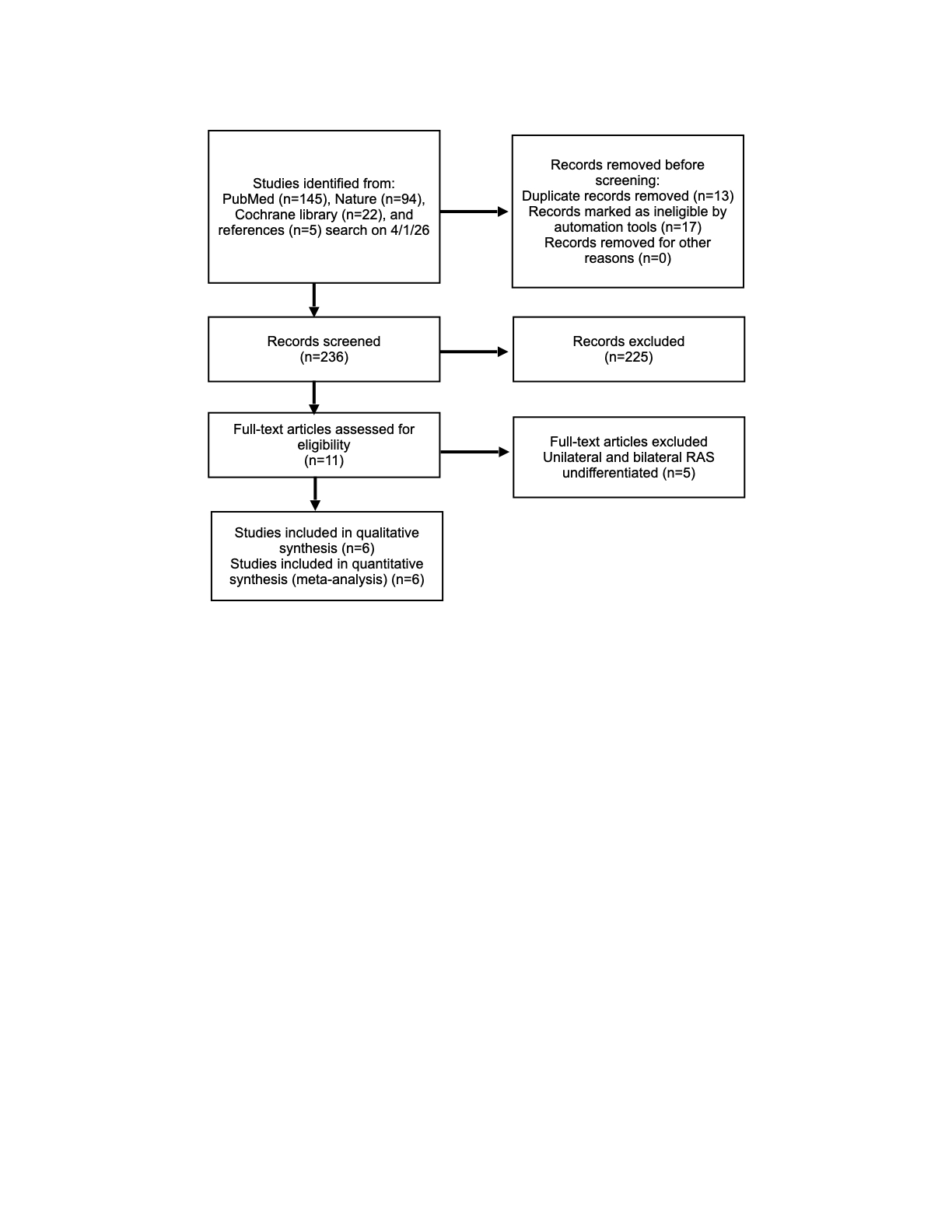
The studies included in this analysis were identified through the study selection process illustrated in the PRISMA flow diagram (Figure 1).
Primary + subgroup prevalence meta-analysis
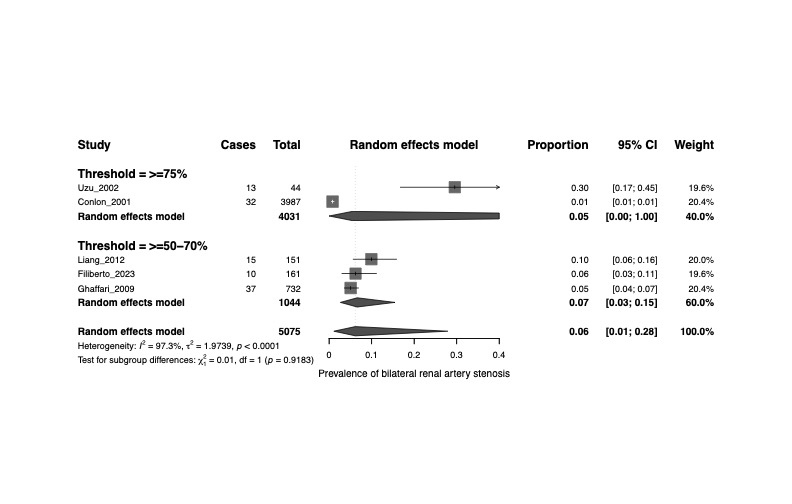
A random-effects meta-analysis was conducted using five studies [6-10] to estimate the pooled prevalence of bilateral RAS.
The pooled prevalence was 6.2% (95% CI: 1.8%-18.7%). Substantial heterogeneity was observed (I 2 = 97.3%, p < 0.0001).
The subgroup analysis was based on stenosis definition. Studies using a ≥ 75% threshold and a pooled prevalence of 5.5% (95% CI: 0.1%-73.4%), with extremely high heterogeneity (I 2 = 99.1%). Studies using lower thresholds (≥ 50-70%) demonstrated a pooled prevalence of 6.6% (95% CI: 4.3%-10.0%), with moderate heterogeneity (I 2 = 61.4%). Differences between subgroups were assessed using a test for subgroup differences, which was not statistically significant (p = 0.075), likely reflecting the limited number of studies.
Table 2 displays the results of Schulte-Kemna [11]. This data was extracted and used to calculate exploratory binary analyses for heart failure hospitalization and mortality.
Exploratory analysis: Mortality
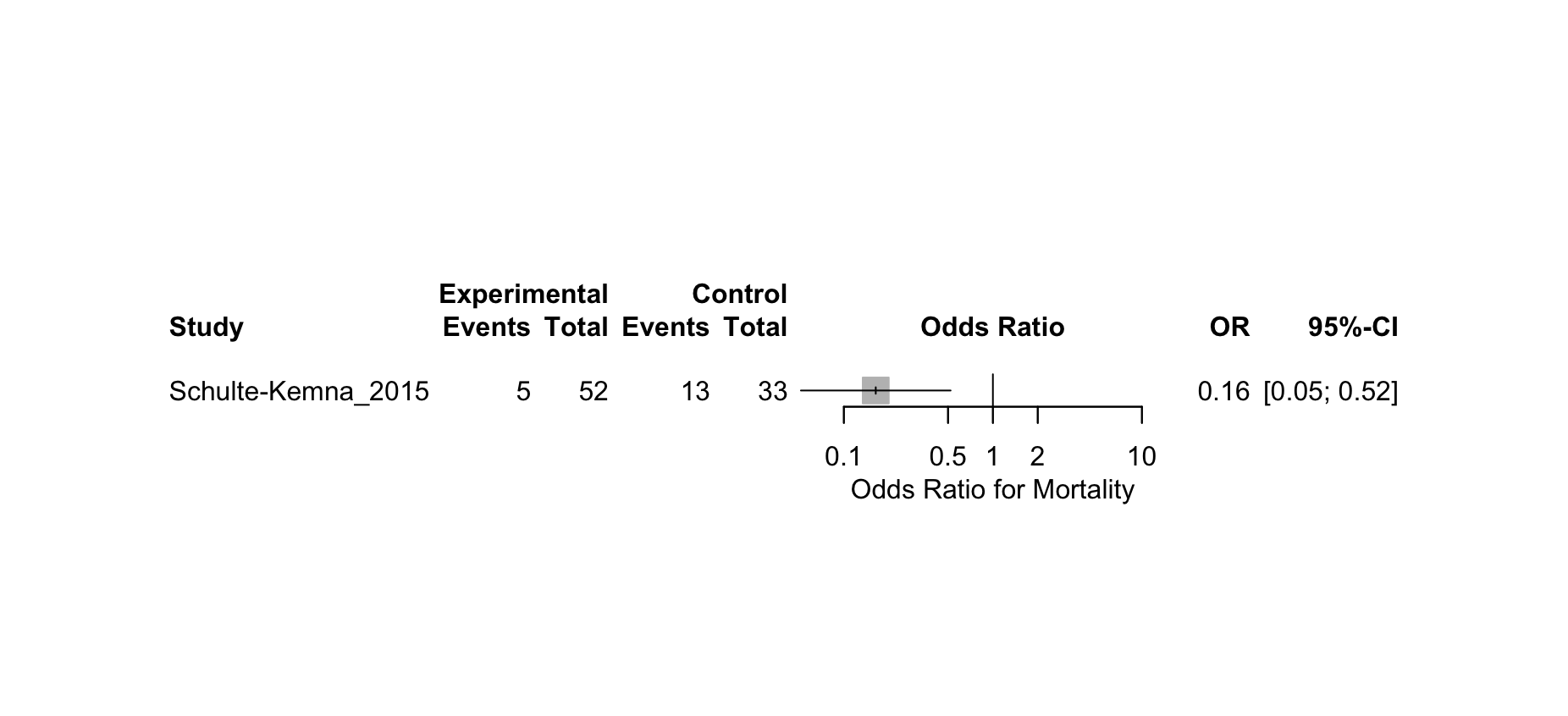
An exploratory binary analysis of a single study [11] suggests a potential reduction in odds of death with revascularization compared with medical therapy. The odds ratio was found to be 0.16 (95% CI: 0.05-0.52, p = 0.002) (Figure 2 and Figure 3). However, these findings are based on a single study and should be interpreted cautiously.
Exploratory analysis: Heart failure hospitalization
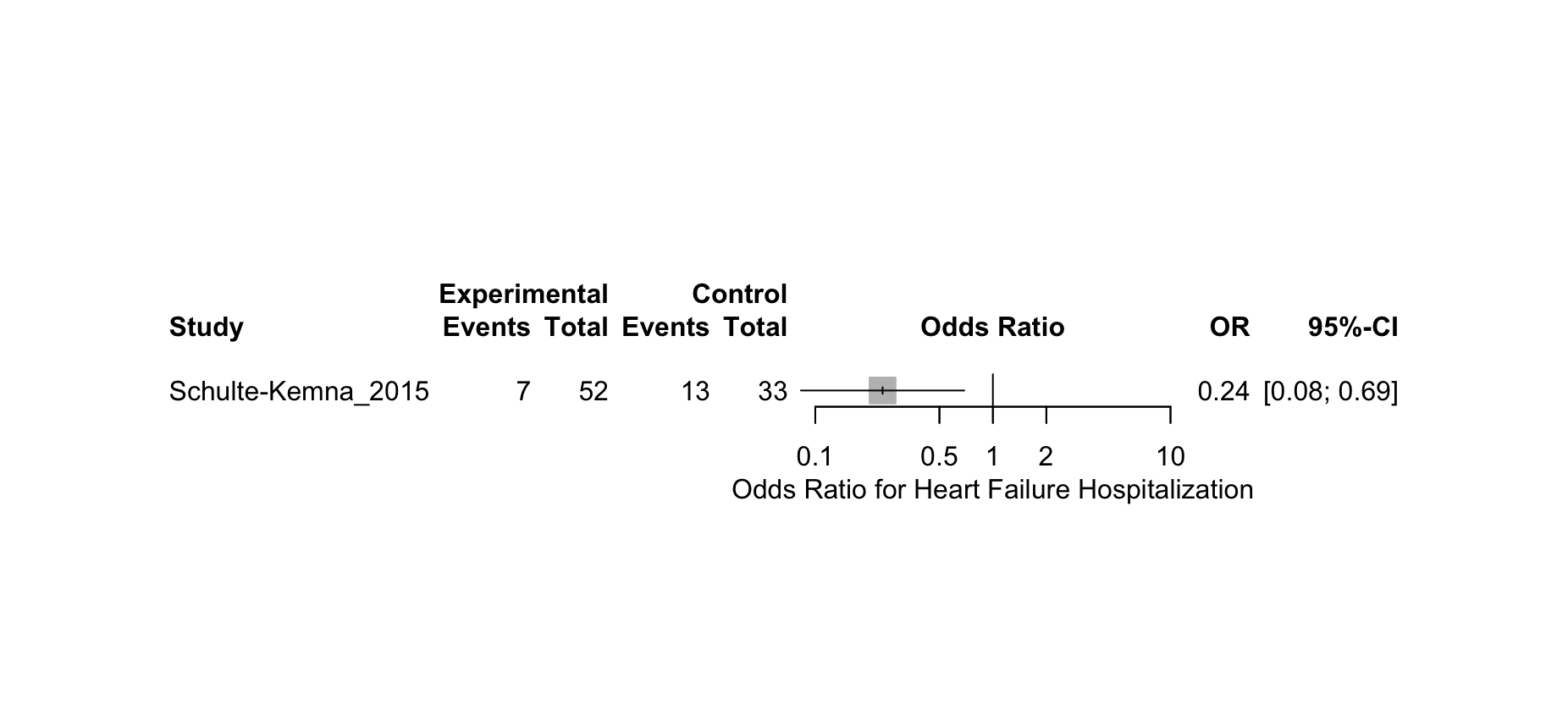
A second exploratory analysis from the same study suggests a reduction in heart failure hospitalization. The odds ratio was 0.24 (95% CI: 0.08-0.70, p = 0.008) (Figure 4).
Given the high heterogeneity and limited number of studies, these findings should be interpreted with caution.
Risk of bias of included studies
The risk of bias assessment is summarized in table 3. Most studies demonstrated low to moderate risk of bias across the modified QUADAS-2 domains. Higher risk of bias was primarily observed in patient selection due to the inclusion of highly selected populations, such as patients undergoing coronary angiography, vascular surgery, or those with pre-existing renal dysfunction. One study demonstrated high overall risk of bias due to limited methodological reporting and small sample size. Applicability concerns were generally moderate, reflecting the predominance of high-risk clinical populations rather than general population samples.
Discussion
This meta-analysis evaluated the prevalence of bilateral RAS and explored associated clinical outcomes. The study characteristics and patient demographics presented in table 1 demonstrated a total of 5,972 patients with varying clinical backgrounds, including patients undergoing coronary angiography, vascular surgery, or evaluation for chronic kidney disease. The study sample size ranged from 44 to 3,987 participants. The mean age ranged from 59 to 71 years and there was a male predominance observed of 43.2% to 84%, therefore the studies predominantly were older males. Across the studies, hypertension was highly prevalent, with other comorbidities present including diabetes mellitus (28-45%), hyperlipidemia, coronary artery disease, and chronic kidney disease.
The reported prevalence of bilateral RAS varied considerably across studies, ranging from 0.8% to 9.9%. Higher prevalence rates were reported in more selective, high-risk populations such as patients undergoing vascular surgery or coronary bypass evaluation.
The pooled prevalence of 6.2% should be interpreted cautiously due to the high heterogeneity (I 2 = 97.3%). The substantial variability between studies suggests that the prevalence of bilateral RAS is highly dependent on study-specific factors rather than representing a single underlying population estimate. High heterogeneity refers to data with high variability in findings, and the included studies lacked methodological and clinical uniformity [12]. This degree of heterogeneity likely reflects differences in patient populations, diagnostic modalities, disease severity thresholds, and study design. For example, studies including higher-risk populations or those undergoing advanced imaging may report substantially higher prevalence estimates compared to broader or screening populations.
Table 2 displays the improvement in blood pressure between the two groups, specifically revascularization compared to conservative treatment, in patients with severe bilateral RAS diagnosed by duplex ultrasound. The blood pressure had greater reductions after revascularization. Renal function (Cr) showed a trend toward improvement only with intervention, whereas it remained unchanged in the medical group. The medication burden decreased after revascularization, whereas it increased in the conservative group.
Exploratory analyses of clinical outcomes suggested that revascularization may be associated with reduced mortality (OR 0.16) and decreased heart failure hospitalization (OR 0.24). These findings were statistically significant; however, they are derived from a single study, limiting their generalizability. Several studies identified cardiovascular comorbidity and renal dysfunction as key predictors of bilateral RAS. For example, the Ghaffari study [8] reported increased odds in patients with prior coronary artery bypass grafting (CABG), while the Filiberto study [9] demonstrated significantly higher postoperative mortality in patients with bilateral disease. These results should not be considered confirmatory, and emphasize the need for larger, well-designed studies to validate these potential benefits.
Several limitations should be acknowledged. First, the small number of included studies reduces statistical power and limits the reliability of subgroup analyses. Second, the extremely high heterogeneity undermines the interpretability and suggests that the meta-analysis may not fully describe the clinical patterns of bilateral RAS. Third, variability in study design, patient selection, and diagnostic criteria likely contributed to bias and inconsistent findings. Finally, the exploratory outcome analyses were limited to a single study.
Despite these limitations, this study provides a comprehensive synthesis of the available evidence on the prevalence of bilateral RAS and highlights the uncertainty surrounding the disease and the reliability of treatment options. The findings demonstrate the need for standardized definitions, consistent imaging criteria, and studies to better characterize the true prevalence, clinical significance, and management of this condition.
Conclusion
The outcomes of the meta-analysis in this paper demonstrate that the prevalence of bilateral RAS is relatively low but variable across studies and depends on the population that is being studied. The pooled prevalence was 6.2% and the prevalence for the ≥ 75% threshold was 5.5% and for the lower thresholds (≥ 50-70%) was 6.6%. The prevalence is strongly influenced by the study population and clinical context, as evidenced by the high heterogeneity. These findings limit the generalizability of the study.
Compared with an observational study of bilateral RAS, they reported that 75% of cases involve unilateral rather than bilateral stenosis [1]. Another study found bilateral disease to be associated with a 4-year survival of 47% compared to 59% for patients with unilateral disease [5].
There was an abundance of studies focused on bilateral RAS in diseased patient populations, such as patients with coronary artery disease or carotid artery disease, and post-myocardial infarction patients, and the definition of stenosis varied between studies. Future studies focused on bilateral RAS in the general population, as well as risk factors, management, and treatment, would greatly benefit these patients.
The clinical outcomes associated with bilateral RAS may benefit from revascularization therapy. However, these observations were constrained by limited evidence and a single study analysis.
Overall, these results highlight substantial uncertainty in both the epidemiology and clinical implications of bilateral RAS. Future research should focus on standardized diagnostic criteria, well-defined patient populations, and prospective studies to better clarify prevalence and guide management strategies.
Conflicts of Interest
No conflicts of interest for any of the authors.
Acknowledgement
This research was funded by Lincoln Memorial University-Debusk College of Osteopathic Medicine Research Department.
The datasets and R code used for this meta-analysis are available from the corresponding author upon reasonable request.
References
- Rout P, Rauf N, Bokhari SRA (2026) Renal artery stenosis. StatPearls.
- Renin-angiotensin-aldosterone system (RAAS). Cleveland Clinic.
- Matam MB, Chand S, Harikrishnan S, et al. (2025) A literature review of renal artery stenosis: Presentation, diagnosis, and management options in secondary hypertension. Cureus 17: e92945.
- Garovic VD, Kane GC, Schwartz GL (2005) Renovascular hypertension. Cleveland Clinic Journal of Medicine 72: 1135-1144.
- Song HY, Hwang JH, Noh H, et al. (2000) The prevalence and associated risk factors of renal artery stenosis in patients undergoing cardiac catheterization. Yonsei Med J 41: 219-225.
- Conlon PJ, Little MA, Pieper K, et al. (2001) Severity of renal vascular disease predicts mortality in patients undergoing coronary angiography. Kidney Int 60: 1490-1497.
- Uzu T, Takeji M, Yamada N, et al. (2002) Prevalence and outcome of renal artery stenosis in atherosclerotic patients with renal dysfunction. Hypertens Res 25: 537-542.
- Ghaffari S, Sohrabi B, Siahdasht RB, et al. (2009) Prevalence and predictors of renal artery stenosis in hypertensive patients undergoing coronary angiography. Hypertens Res 32: 1009-1014.
- Filiberto AC, Miao S, Ren Y, et al. (2023) Bilateral renal artery stenosis impacts postoperative complications after major vascular surgery. Surg Open Sci 14: 17-21.
- Liang F, Hu DY, Wu MY, et al. (2012) The incidence of renal artery stenosis in the patients referred for coronary artery bypass grafting. Indian J Nephrol 22: 13-17.
- Schulte-Kemna L, Seitz KH, Büttner S, et al. (2015) Revascularisation of high-grade bilateral renal artery stenosis. Journal of Hypertension 33: e485-e486.
- Fletcher J (2007) What is heterogeneity and is it important? BMJ 334: 94-96.
Corresponding Author
Taylor Campbell, Lincoln Memorial University- DeBusk College of Osteopathic Medicine, United States of America.
Copyright
© 2026 Hasni K, et al. This is an open-access article distributed under the terms of the Creative Commons Attribution License, which permits unrestricted use, distribution, and reproduction in any medium, provided the original author and source are credited.