
Isolated Proteinuria Progression to Preeclampsia in Pregnancy: A Systematic Review and Meta Analysis of Proportion, Risk Factors, and Outcomes
Abstract
Objective: This paper examines the proportion of isolated proteinuria progression to preeclampsia in pregnancy, and the risk factors, management and pregnancy outcomes associated with the progression. Conducting systematic reviews and meta-analyses enables a thorough assessment of isolated proteinuria and its progression to preeclampsia. The objective of this paper is to determine the rate at which isolated proteinuria progresses to preeclampsia and to improve patient outcomes.
Methods: Five studies (n = 413) were included. Three meta-analyses were performed: random-effects meta-analysis, sensitivity analysis, and a leave-one-out analysis.
Results: The pooled analysis demonstrated that 29% of women with isolated proteinuria progress to preeclampsia (95% CI 17%-46%) with substantial heterogeneity across studies (I ² = 73.1%, p = 0.005). Sensitivity analysis yielded similar results (26.0%; 95% CI 17%-37%), with reduced heterogeneity. Higher proteinuria levels, earlier onset, and prior preeclampsia were associated with increased risk.
Conclusion: These findings suggest that isolated proteinuria represents a clinically significant risk of progression to preeclampsia requiring close clinical monitoring.
Keywords
Isolated proteinuria, Isolated proteinuria progression to preeclampsia, Preeclampsia, Proteinuria
Introduction
Pregnancy can lead to multiple physiological changes in the body, including an increase in glomerular filtration rate (GFR) and enhanced protein excretion. These changes are necessary for the body to meet the increased metabolic demands of the fetus [1]. As the pregnancy progresses, plasma volume increases, leading to increased blood flow to the kidneys and the body retaining more water and sodium. The kidneys begin to increase filtration and the degree of proteinuria; an early-pregnancy proteinuria level is required for comparison. A baseline level of excretory kidney function should be established at the beginning of pregnancy to determine the presence or absence of proteinuria [2].
Isolated proteinuria in pregnancy is defined as ≥ 300 mg/day (24-hour urine) at any time during gestation. Chronic isolated proteinuria during pregnancy is at less than 20 weeks of gestation, and gestational proteinuria is proteinuria at and after 20 weeks of gestation. Gestational proteinuria often resolves by 3 months after birth. A new finding of proteinuria before 20 weeks’ gestation proposes that the patient has a previous kidney disease [2].
The progression of isolated proteinuria to preeclampsia is a limited research topic. Preeclampsia is defined as a disorder of pregnancy associated with new-onset hypertension, blood pressure greater than or equal to 140 mmHg systolic and/or 90 mmHg diastolic on 2 separate occasions at least 4 hours apart, and proteinuria or new onset of hypertension plus end-organ dysfunction with or without proteinuria. End-organ dysfunction is quantified as proteinuria ≥ 0.3 g in a 24-hour urine specimen or protein/creatinine ratio ≥ 0.3, platelet count <100,000/microL, Serum creatinine >1.1 mg/dL, liver transaminases at least twice the upper limit, pulmonary edema, new onset and persistent headaches, or visual symptoms [3,4].
This study aims to quantify the proportion of isolated proteinuria progressing to preeclampsia and to synthesize associated risk factors, management strategies, and outcome. A literature review was conducted to identify studies on isolated proteinuria in pregnancy and blood pressure. The review found five studies for the meta-analysis that researched the prevalence of chronic isolated proteinuria in pregnancy, as well as possible risk factors, maternal characteristics, management, and maternal and fetal outcomes. The results of this paper and the discussion about future topics of research on proteinuria in pregnancy are included later in this paper.
Methods
Literature review
A comprehensive search was conducted using academic databases and search engines, including PubMed, Google Scholar, Nature, and Cochrane Library.
The following keywords were used in the search process:
Keywords = ("isolated proteinuria" OR "gestational proteinuria" OR "proteinuria without hypertension") AND (pregnancy OR pregnant).
The references in the resulting articles and studies were reviewed to include the articles that did not contain the keywords but still studied pregnancy complicated by isolated proteinuria.
This study was conducted in accordance with PRISMA guidelines.
Source inclusion and exclusion criteria
Studies included in this meta-analysis were selected based on the following criteria:
1. Written in English
2. Available to the public via online databases
3. Studies include pregnant patients with isolated proteinuria at any point in pregnancy without hypertension, progression to preeclampsia.
4. Studies are cohort, case-control, or registry studies.
5. The studies included quantitative clinical data on the prevalence of isolated proteinuria during pregnancy.
Studies were excluded if they lacked published quantitative data, did not include isolated proteinuria, included CKD/hypertension populations, or included case reports or small case series.
The following filters were applied on PubMed: English (language), free full text/full text (text availability), human (species).
Assembly of data
The primary objective was to estimate the proportion of women with isolated proteinuria who progress to preeclampsia. Secondary aims were to summarize reported risk factors, management strategies, and maternal/fetal outcomes.
Quantitative data and demographic information from the selected studies in the literature review for all patients with isolated proteinuria at any point in pregnancy without hypertension who progressed to preeclampsia were recorded in a spreadsheet. Table 1 below presents the demographic information for each study included in this paper (Table 1). The included studies were observational in design and varied in sample size, diagnostic criteria for proteinuria, and gestational age at diagnosis. In this study, isolated proteinuria is defined as ≥ 300 mg/day of protein excretion or equivalent protein-to-creatinine ratio in the absence of hypertension at the time of diagnosis.
Patient demographic data, including maternal age, body mass index, parity, and prior history of preeclampsia, were reported inconsistently across studies. While several studies provided these variables, incomplete reporting and variability in presentation precluded quantitative synthesis.
Analytical approach
Several types of meta-analyses were used to evaluate the data from the studies. The first meta-analysis was conducted to determine the proportion of pregnant women who were identified with isolated proteinuria and progressed to preeclampsia. The second meta-analysis was a sensitivity analysis, omitting one study because it was an outlier in terms of progression rate, and would have disproportionately affected the results. The third meta-analysis was a leave-one-out analysis to assess how much each study influences the overall meta-analysis result by removing one study at a time and recalculating the estimate. Prevalence of isolated proteinuria, risk factors for progression, maternal and fetal outcomes, and management strategies were reviewed from each study, but meta-analyses were not performed on this data due to limited reports and varying information and definitions.
Software and reproducibility
Meta-analyses were performed using RStudio (version 2025.09.1+401) and R (version 4.5.3). Meta-analyses were conducted using the meta package, specifically the metaprop function. A random-effects model was applied using the inverse-variance method with a restricted maximum-likelihood (REML) estimator for the between-study variance. A logit transformation of proportions was used to stabilize variance, and the Hartung-Knapp adjustment was applied to calculate confidence intervals. Sensitivity analysis and leave-one-out analysis were performed using the metaprop and metainf functions.
ChatGPT (OpenAI) was used as an assistive tool to generate research questions, outline the manuscript structure, and refine language for clarity. All outputs were critically reviewed, edited, and verified by the authors, who assume full responsibility for the content.
Results
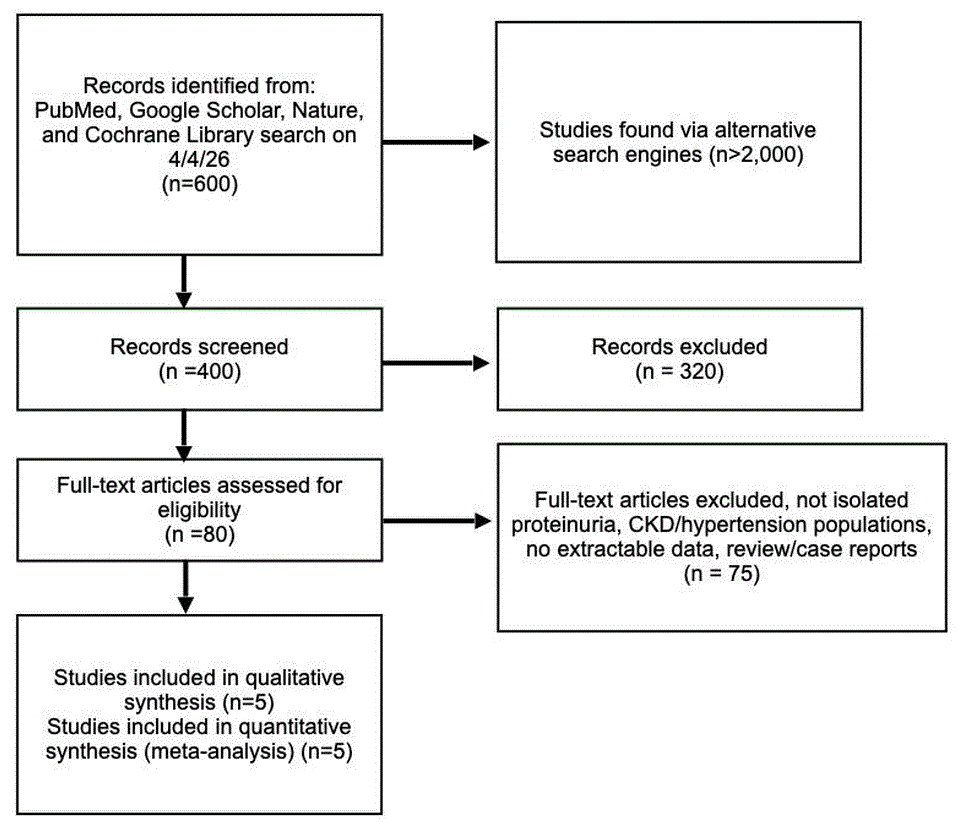
The studies included in this analysis were identified through the study selection process illustrated in the PRISMA flow diagram (Figure 1). Patient demographic data, including maternal age, body mass index, parity, and prior history of preeclampsia, were reported inconsistently across studies. While several studies provided these variables, incomplete reporting and variability in presentation precluded quantitative synthesis.
Meta-analysis
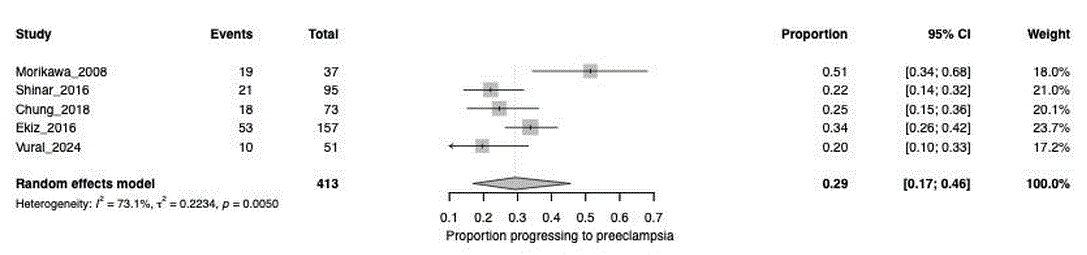
Across the five included studies [5-9], the progression rates ranged from 20% to 51%, with the highest estimate reported by Morikawa et al. at 51.4%. The remaining four studies reported a more consistent range of 20% to 34%.
A random-effects meta-analysis of the five studies found that 29% of women with isolated proteinuria progress to preeclampsia (95% CI 17%–46%). Substantial heterogeneity was observed across studies (I ² = 73.1%, p = 0.005) (Figure 2).
Sensitivity analysis
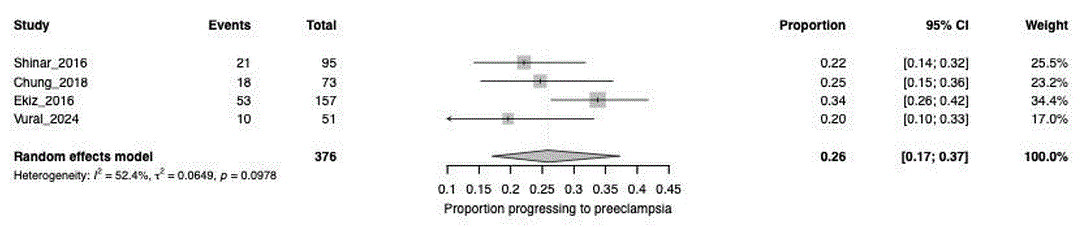
In the sensitivity analysis excluding Morikawa et al., which had the highest progression rate, the pooled progression rate was 26.0% (95% CI 17%-37%), and heterogeneity was reduced but remained moderate (I ² = 52.4%, p = 0.0978) (Figure 3). These findings suggest that Morikawa et al. contributed substantially to between-study variability, although it was not the sole source of heterogeneity.
Leave-one-out analysis
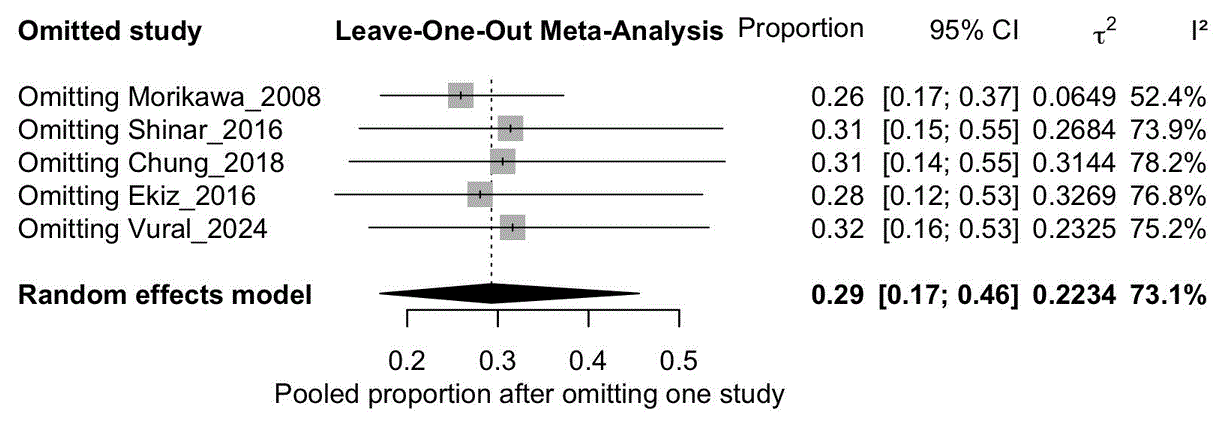
Leave-one-out analysis demonstrated that with the omission of any single study, the overall pooled estimate did not change substantially, with pooled estimates ranging from 26% to 32% (Figure 4). However, exclusion of Morikawa et al. resulted in the lowest estimate and was not associated with a marked reduction in heterogeneity in the sensitivity analysis. These findings suggest that the overall results are robust and not driven by any single study.
Prevalence of isolated proteinuria
The prevalence of isolated proteinuria greatly varied across studies. They ranged from approximately 0.28% to 0.54% of pregnancies in the larger cohort studies, while one large prospective cohort reported proteinuria on at least one occasion in 7.7% of pregnancies, with persistent proteinuria in a smaller subset. Due to the wide variability and differing definitions, a pooled prevalence estimate was not calculated.
Risk factors for progression
The studies that were reviewed identified clinical factors associated with an increased risk of progression of isolated proteinuria to preeclampsia. These risk factors included: higher proteinuria levels (particularly ≥ 2 g/day), earlier gestational age at onset of proteinuria, history of preeclampsia, and higher systolic blood pressure at presentation. Later gestational age at onset and increasing maternal age were associated with a lower likelihood of progression in some studies. Due to heterogeneity in reporting and the lack of a consistent effect estimate, a quantitative synthesis of risk factors was not performed.
Maternal and fetal outcomes
Women with isolated proteinuria who progressed to preeclampsia experience higher rates of adverse outcomes. These outcomes included an earlier delivery, increased rates of preterm birth, and fetal growth restriction. Women with isolated proteinuria who did not develop hypertension differed in that they generally had maternal and neonatal outcomes comparable to normotensive controls.
Management strategies
The management of isolated proteinuria in pregnancy was reviewed. The management approaches were mostly observational and focused on clinical surveillance. Common strategies included serial blood pressure monitoring, repeat assessment of proteinuria, and fetal growth surveillance. No interventional trials were identified.
Discussion
This meta-analysis demonstrates that isolated proteinuria in pregnancy is associated with a substantial risk of progression to preeclampsia. The study characteristics, study design, sample size, gestational age at diagnosis, and definition of proteinuria presented in Table 1 demonstrate 413 patients with isolated proteinuria. The study sample size ranged from 37 to 157 participants.
The primary finding of the meta-analysis was that approximately 29% of women with isolated proteinuria progressed to preeclampsia, highlighting that this condition is not benign and represents a clinically important risk state that needs proper management to avoid unwanted maternal and fetal outcomes.
The pooled estimate was consistent across studies, with most reporting progression rates between 20% and 34%, with one study having a slightly higher rate. A sensitivity analysis was performed and supported these findings, showing that the removal of an individual study did not substantially alter the overall estimate. Heterogeneity was moderate to high in the primary analysis (I ² = 73.1%); it decreased with the exclusion of the outlier study, suggesting that variability may be driven by differences in study populations and definitions rather than instability of the overall finding. Even after adjustment, the pooled estimate remains within a similar range, which supports the robustness of the association.
The moderate to high heterogeneity is likely due to clinical and methodological differences across studies, including diagnostic criteria for proteinuria (e.g., 24-hour urine collection versus protein-to-creatinine ratio), thresholds for proteinuria, and variability in gestational age at diagnosis. Other causes of moderate to high heterogeneity could be differences in patient populations, including baseline risk factors and obstetric history, and study design, including both retrospective and prospective designs.
Several risk factors for progression from isolated proteinuria to preeclampsia were identified, including higher proteinuria levels (particularly ≥ 2 g/day), earlier gestational age at onset, and a history of preeclampsia. Later onset of proteinuria and increasing maternal age were associated with a lower risk in some studies, but this was not clearly defined in terms of a specific maternal age or time period for proteinuria onset. This highlights the importance of identifying patients at higher risk for progression for monitoring and management.
Maternal and fetal outcomes included earlier delivery, increased rates of preterm birth, and fetal growth restriction, with a generally lower rate of these outcomes in isolated proteinuria without the progression to preeclampsia.
Management strategies across studies were mostly observational and focused on close clinical surveillance. Common approaches included serial blood pressure monitoring, repeated assessment of proteinuria, and fetal growth evaluation. More research is needed on the optimal management of these patients and on how best to treat them to improve maternal and fetal outcomes.
This study had limitations, including a small number of included studies, which limits the precision of pooled estimates and increases the potential for publication bias. The heterogeneity across studies was moderate to high, reflecting the differences in study design, patient populations, and diagnostic criteria. The demographic and clinical variables were inconsistently reported, not allowing proper review and reporting.
Despite these limitations, this study has important strengths and highlights the need for further research on isolated proteinuria in pregnancy. This study represents a focused review of the available literature on isolated proteinuria in pregnancy and provides a quantitative analysis of progression to preeclampsia. The sensitivity and leave-one-out analyses strengthen the validity of these findings.
Conclusion
The outcomes of the meta-analysis in this paper demonstrate that the proportion of progression from isolated proteinuria to preeclampsia is associated with a meaningful risk of progression to preeclampsia, affecting approximately one in three patients. The proportion is strongly influenced by the study population and clinical context, as evidenced by the high heterogeneity. These findings limit the generalizability of the study.
There were few studies on isolated proteinuria in pregnancy, limiting the scope of this meta-analysis and underscoring the need for further research. A focused synthesis of the available literature on isolated proteinuria in pregnancy provides a quantitative estimate of progression to preeclampsia.
The maternal and fetal outcomes associated with the progression of isolated proteinuria to preeclampsia, such as earlier delivery, increased rates of preterm birth, and fetal growth restriction, are important to reduce, and further research is vital to decrease this occurrence. Overall, these results highlight substantial uncertainty regarding isolated proteinuria. Future research should focus on standardized diagnostic criteria, well-defined patient populations, and prospective studies to better clarify prevalence and guide management strategies.
Acknowledgement
This research was funded by Lincoln Memorial University-Debusk College of Osteopathic Medicine Research Department. The datasets and R code used for this meta-analysis are available from the corresponding author upon reasonable request.
Conflicts of Interest
No conflicts of interest for any of the authors.
References
- Ghamrawi R, Kattah AG, Garovic VD (2019) Isolated proteinuria of pregnancy: A call for action. Kidney Int Rep 4: 766-768.
- Bertoni I, Williams S (2025) Approach to investigation and management of proteinuria in pregnancy. Clin Med (Lond) 25: 100281.
- Luger RK, Kight BP (2022) Hypertension in pregnancy. In: StatPearls. Treasure Island (FL): StatPearls Publishing.
- August P, Sibai BM (2025) Preeclampsia: Clinical features and diagnosis. In Barss VA (Edn), UpToDate.
- Morikawa M, Yamada T, Yamada T, et al. (2008) Pregnancy outcome of women who developed proteinuria in the absence of hypertension after mid-gestation. J Perinat Med 36: 419-424.
- Shinar S, Asher Landsberg J, Schwartz A, et al. (2016) Isolated proteinuria is a risk factor for pre-eclampsia: A retrospective analysis of the maternal and neonatal outcomes in women presenting with isolated gestational proteinuria. J Perinatol 36: 25-29.
- Chung WH, To WWK (2018) Outcome of pregnancy with new onset proteinuria and progression to pre-eclampsia: A retrospective analysis. Pregnancy Hypertens 12: 174-177.
- Ekiz A, Kaya B, Polat I, et al. (2016) The outcome of pregnancy with new onset proteinuria without hypertension: Retrospective observational study. J Matern Fetal Neonatal Med 29: 1765-1769.
- Vural F, Suna Yildirim Karaca, Burak Bayraktar, et al. (2024) Clinical significance of isolated gestational proteinuria: A prospective analysis of maternal and neonatal outcomes. J Clin Obstet Gynecol 34: 101-108.
Corresponding Author
Taylor Campbell, OMSIV, Lincoln Memorial University, DeBusk College of Osteopathic Medicine, United States of America.
Copyright
© 2026 Hasni K, et al. This is an open-access article distributed under the terms of the Creative Commons Attribution License, which permits unrestricted use, distribution, and reproduction in any medium, provided the original author and source are credited.