
Dianthus Marinae (Caryophyllaceae): A New Species from Lebanon
Abstract
A new species, Dianthus marinae (Caryophyllaceae), is described from the high mountains of Lebanon. It is morphologically similar to D. orientalis subsp. nassireddini and D. crinitus subsp. crinitus. The new species can be distinguished by the following characters: leaves with scabrid margins (Vs. usually glabrous in both D. orientalis subsp. nassireddini and D. crinitus subsp. crinitus), bracteoles with a narrow membranous-fimbriate margin (Vs. the margin is entire or erose in the other two species), length of calyx teeth (ca. 1 mm Vs. at least 3 mm in the other two species), and ebarbulate petals (Vs. barbulate in D. orientalis subsp. nasssireddini). D. marinae is a high-altitude endemic known from only two locations on the Mount Lebanon range, i.e. Yammoune and the eastern slopes of Mount Sannine, where it grows on rocky slopes between 1570 and 2500 m a.s.l. A morphological description, illustrations, habitat, and an assessment of its conservation status are provided. Based on its highly restricted geographic range and inferred threats from grazing and agriculture, D. marinae is assessed as Endangered (EN) according to IUCN Red List criteria. This discovery underscores the unique biodiversity of Lebanon's vulnerable high-mountain ecosystems and highlights the urgent need for targeted conservation measures.
Keywords
Conservation status, Dianthus, Endemic, Mountain flora, New species, Lebanon.
Introduction
The genus Dianthus L. contains approximately 383 species, and it is the second one in Caryophyllaceae, after Silene L. in terms of the number of species. This genus is mainly distributed in the Mediterranean region, SW-Asia, the Caucasus and the Irano-Turanian region, while some species occur in eastern and southern Africa [1,2]; in the Americas, the genus Dianthus is considered an alien, excepting for Alaska and north-western Canada ( https://powo.science.kew.org/taxon/urn:lsid:ipni.org:names:6245-1 ).
The flora of Lebanon includes 15 Dianthus species according to Boloumoy (1930) [3] and Thiébaut (1936) [4], whereas Mouterde (1966) [5] listed 12 species with many infraspecific taxa.
Dianthus is a difficult genus from the taxonomic point of view, as highlighted by several authors [2, 6-10]. Valente, et al., (2010) [6] stated that the genus Dianthus is one of the genera with the highest species diversification rate among flowering plants in terms of the characters they possess.
Since Williams (1893) [11], the genus Dianthus has not been extensively analysed from the taxonomic point of view. He analysed, obviously, the species known up to that date, but many new species have been described since then (https://ipni.org/search?q=Dianthus) As a whole, the classification of the genus (especially the subgeneric one and the genus boundaries), have not been still solved.
Lebanon’s position at the crossroads of continents and its varied topography gives it a rich and unique biodiversity [5,12,13]. The country is part of the Mediterranean Basin, a global biodiversity hotspot renowned for its high number of endemic species [13,14,15]. Lebanon itself is considered a local hotspot for biodiversity [16].
Materials and Methods
Field surveys in the Bekaa Governorate (Yammouneh-Hermel and Qaa, North Eastern Lebanon) were carried out in June 2025. Collected material was deposited at BEI herbarium. Pertinent literature, i.e. those regarding the flora of neighbouring countries [3,4,5,12,17-25] and some related articles [11,26-29] was consulted. Further specimens, kept at BEI, ISTE, ISTF, MARA, NGBB, and POST, were analyzed for comparisons. In addition, high-resolution photographs of further herbarium specimens at E, G, and K and available online, were studied
Results and Discussion
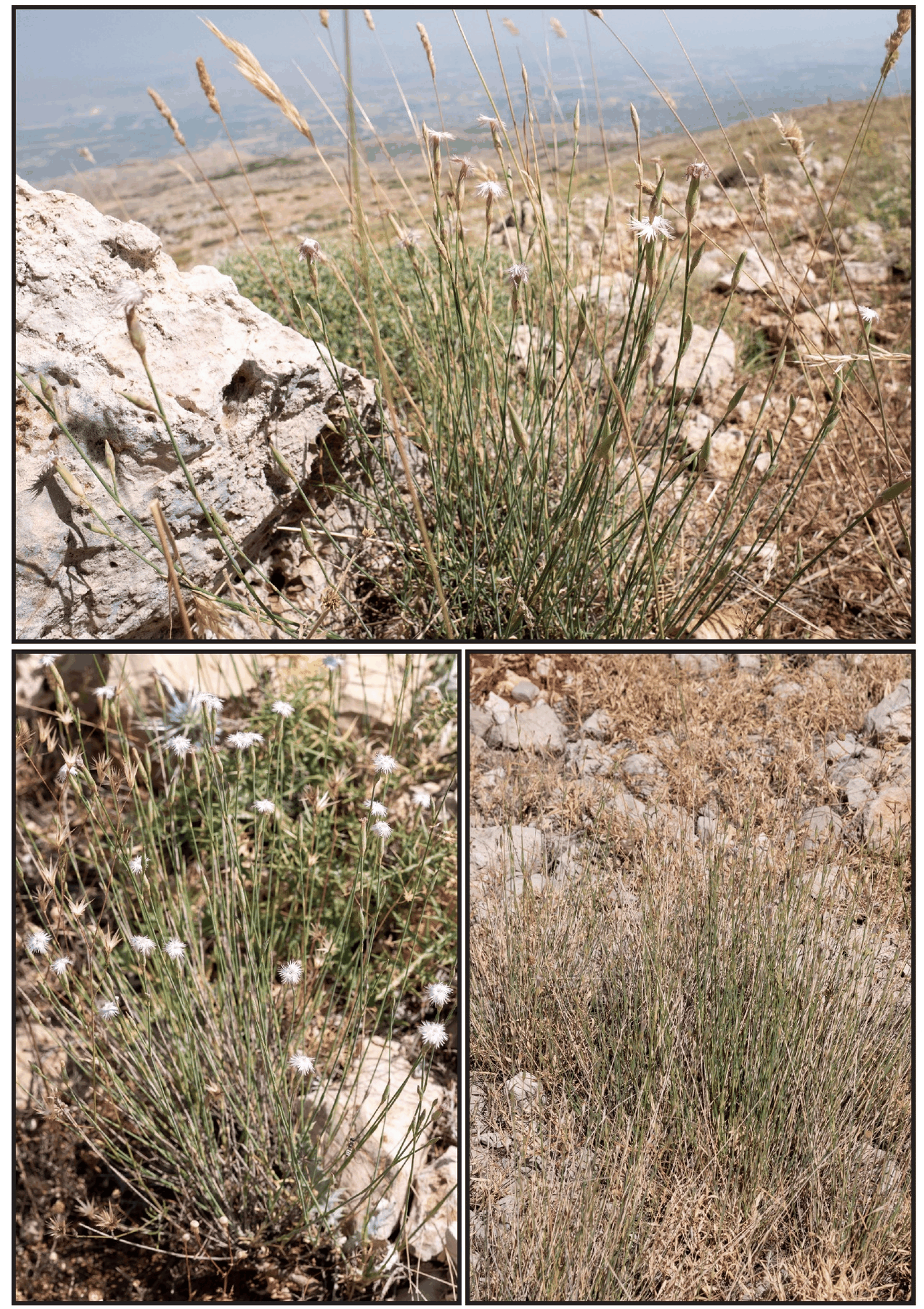
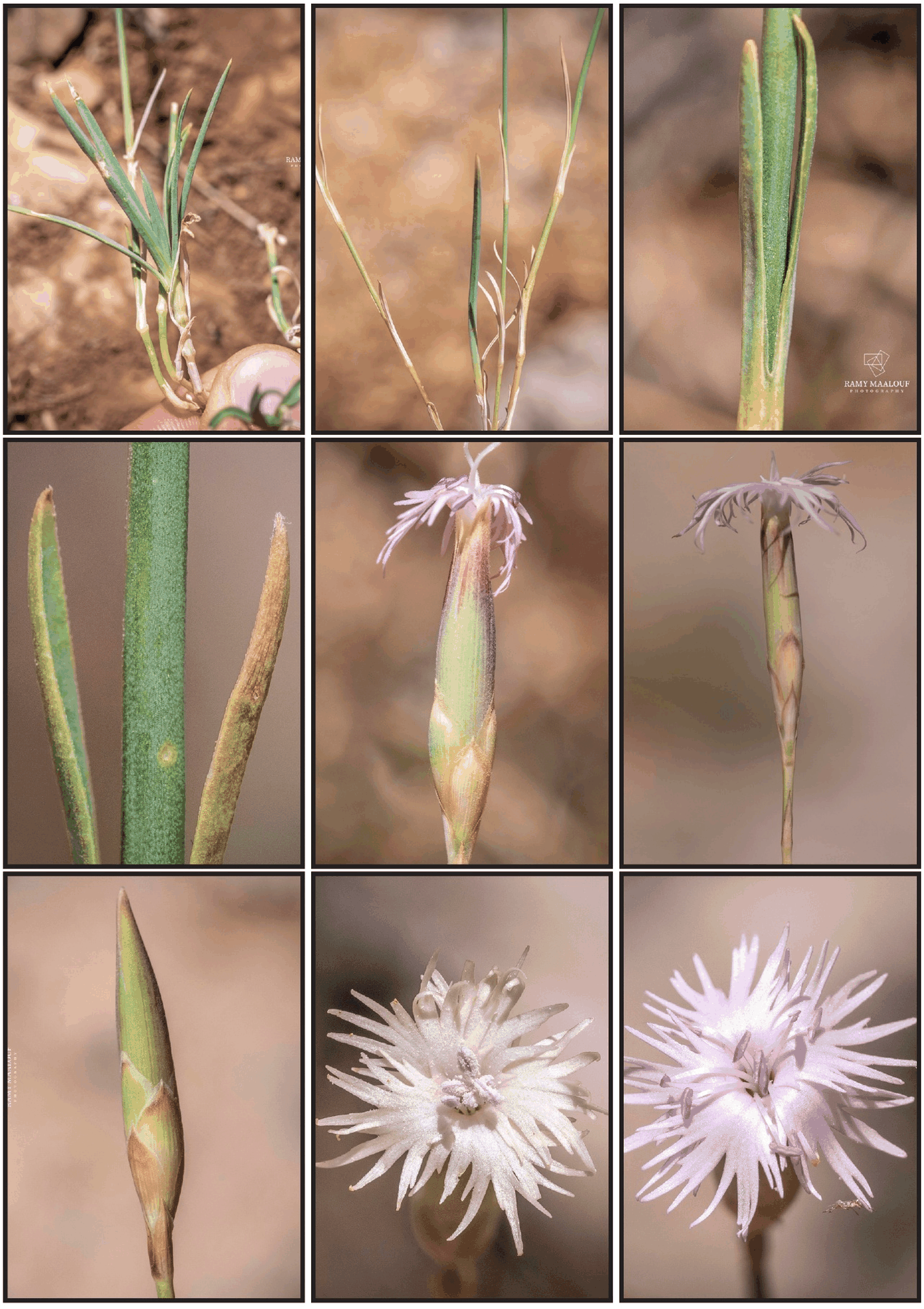
Dianthus marinae : Maalouf & M Keskin, sp. nov. (Figure 1, Figure 2, Table 1).
Type
LEBANON. Mount Lebanon Governorate: Mount Sannine, eastern slopes, 33°57'10.8"N 35°54'35.8"E, alt. 2500 m, 24 June 2025, Maalouf & Itani s.n. (holotype BEI!)
Diagnosis
Dianthus marinae is similar to D. orientalis Adams subsp. nassireddini (Stapf) Rechinger fil. and D. crinitus Sm. subsp. crinitus but differs from both by leaves with scabrid margins, sometimes glabrous towards to apex (in D. orientalis leaves are glabrous; in D. crinitus they are glabrous to sometimes puberulent); bracteoles with a narrow membranous-fimbriate margin (in both other species margins are entire or erose); calyx teeth 1 mm long (in both other species they are longer), and petal limb ebarbulate (barbulate in D. orientalis subsp. nassireddini).
Description
Perennial, densely caespitose herb, forming compact tufts. Stems 45-50 cm tall, erect, ± straight, rarely slightly curved in fruiting stage, unbranched, glabrous, green, and 8-10-noded. Leaves basal and cauline; sterile shoot leaves at the base linear, 35-40 mm × 1.8-2.0 mm, spreading, thickened, pale or dark green, canaliculate in cross-section, with scabrid margins, sometimes glabrous towards to acuminate or acute apex; cauline leaves shorter than internodes and withering after anthesis, with middle stem leaves ca. 10 × 1 mm, narrowly linear, adpressed, canaliculate, glabrous, with an acuminate apex and scabrid margins; in dry state, veins not clearly visible but may appear as 3 faint parallel lines. Inflorescence usually 1-flowered, sometimes 2-flowered. Flowers axillary or terminal. Bracteoles 6, unequal, ovate-lanceolate to lanceolate, 8-10 mm long, 3.5-4.0 mm wide, papery, acuminate, stramineous to greenish with faint reddish tinge at tips, appressed, with a narrow membranous-fimbriate margin; inner bracteoles cuspidate, outer ones aristate to subaristate. Calyx cylindrical, 17-18 mm long, glabrous to faintly puberulent, with ca. 25 inconspicuous veins; teeth 5, ca. 1 mm long, triangular, acute, slightly spreading, shortly ciliate. Petals 5, white, pale lilac or pinkish-purple, with narrow claw included in the calyx tube; lamina 8-10 mm long, glabrous, deeply fimbriate-laciniate to ½ with crisped and narrowly linear segments. Stamens 10, included; filaments slender; anthers purple. Styles 2; stigmas capitate. Mature capsule and seeds not observed.
Etymology
The specific epithet, “marinae”, is dedicated to Marina Alonso Abal, wife of the first author, in recognition of her great support for his work.
Phenology
Flowering time was observed from mid- to late June. Although the full-fruited specimen could not be collected, it is thought to enter the fruiting period in August-September.
Distribution and habitat
Dianthus marinae is here considered as a species endemic to Lebanon, currently known from two disjunct populations in the Mount Lebanon range.
The first population was discovered and photographed on 16 June 2025 in Yammoune (34°06'16.0"N, 36°00'37.8"E) at an altitude of approximately 1570 m. This altitude falls within the transition of the supramediterranean and montane vegetation zones. In this locality, Dianthus marinae grows in association with species such as Astragalus gummifer, Ajuga chamaepitys subsp. tridactylites, Pimpinella tragium subsp. lithophila, Lotus gebelia subsp. libanoticus, Juniperus excelsa, Crataegus azarolus, Hypericum libanoticum, and Phlomis brevilabris.
The second population is located on the eastern slopes of Mount Sannine, where it was documented on 24 June 2025 across a broader altitudinal range from 1700 to 2500 m. Observations and photographs were made at multiple points (33°53'41.2"N, 35°53'22.5"E and 33°53'59.2"N, 35°53'24.3"E). The type specimen was collected at the upper limit of this range (33°57'10.8"N 35°54'35.8"E, alt. 2500 m). The associated flora on these rocky eastern slopes includes endemic and characteristic high-mountain species such as Acantholimon antilibanoticum, Astragalus cruentiflorus, Centaurea mouterdei, and Dianthus pachygonus.
The known localities of Dianthus marinae are phytogeographically significant. The Sannine population is located within Sannine-Knaisse Important Plant Area (IPA), a site recognized for its unique assemblage of high-mountain flora [30]. The Yammoune site is also situated near designated IPAs, highlighting the conservation importance of this region.
Conservation Status
Dianthus marinae is assessed here as Endangered (EN) based on IUCN Red List Criteria [EN B2ab(iii,v)] ( http://www.iucnredlist.org ).
This assessment is justified on the basis of its highly restricted geographic range (Criterion B). The species is known from only two locations (Yammoune and Mount Sannine), meeting the threshold for EN under sub-criterion B2a (≤ 5 locations). The total Area of Occupancy (AOO) is inferred to be very small, likely less than 10 km², based on field observations of the species' scarcity and scattered distribution, thus falling well within the < 500 km² threshold for EN.
Furthermore, a continuing decline is inferred (sub-criterion b) due to ongoing threats. At both locations, pressures from agriculture and/or intense grazing are evident. These activities are known to cause habitat degradation (a decline in quality of habitat, b(iii)) and directly impact the number of mature individuals (b(v)). Although the total population size is difficult to estimate due to the vastness of the terrain, the observation of fewer than 50 individuals during extensive surveys suggests the total population is extremely small, further supporting its threatened status.
Given its classification as Endangered, Dianthus marinae requires urgent conservation attention. We strongly recommend immediate in-situ monitoring to establish a population baseline and formal protection of its known habitats. Concurrently, ex-situ conservation measures, such as seed collection for national and international seed banks, should be initiated to safeguard this unique Lebanese endemic from extinction.
Notes
Dianthus orientalis is a highly polymorphic species, comprising many taxa with unique characters. POWO (https://powo.science.kew.org/taxon/urn:lsid:ipni.org:names:60459031-2) listed 10 accepted subspecies, whereas nine subspecies are recognized by Rechinger (1986) [27]. D. orientalis subsp. nassireddini is a taxon with a typical Irano-Turanian element, which is also present in Lebanon where it has been recorded under the synonym D. orientalis var. brachyodontus by Mouterde (1966) [5]. It is found at altitudes between 1270 and 3000 m. Its full distribution therefore includes Lebanon, Syria, Iran, Iraq, Armenia, and Türkiye [5,27,31-33].
Similarly, Dianthus crinitus is a highly polymorphic species (7 subspecies in POWO 2025). It can be easily distinguished from D. orientalis by its basically hairless petals. It is found at altitudes between 900 and 2800 m. Its distribution area comprises Iran, Iraq, Pakistan, Caucasia, Syria, N-Africa, Armenia, and Türkiye [27,31].
Conclusion
Dianthus marinae is formally described as a new species endemic to the high mountains of Lebanon. It is clearly distinguished from its closest relatives in the region, D. orientalis subsp. nassireddini and D. crinitus subsp. crinitus, by a unique combination of morphological characters, most notably its scabrid leaf margins, fimbriate bracteoles, short calyx teeth, and ebarbulate petals.
The discovery of this high-altitude species, found in the Montane and oro-Mediterranean zones between 1570 m and 2500 m, is a significant addition to Lebanon's unique endemic flora. Its presence within Sannine-Knaisse Important Plant Area (IPA) underscores the conservation value of these fragile ecosystems.
Crucially, based on its highly restricted geographic range, existence at only two known locations, and an inferred continuing decline due to ongoing pressures from grazing and agriculture, Dianthus marinae is assessed here as Endangered (EN) under IUCN criteria. This threatened status demands immediate conservation action. We strongly recommend prioritizing the species for in-situ protection measures, including comprehensive population monitoring and formal habitat safeguarding at its known localities. Simultaneously, ex-situ conservation efforts, such as the collection of seeds for long-term storage in national and international seed banks, are imperative to secure the species' genetic legacy against potential catastrophic events.
The identification of Dianthus marinae as an endangered species not only highlights the ongoing discovery of biodiversity but also serves as a critical call to action for the preservation of Lebanon's irreplaceable high-mountain habitats before more of their unique elements are lost.
Acknowledgment
The first author (RM) is grateful to Dr. Mounir Maalouf for his valuable assistance with the microscopic examination and dissection of floral parts, which was essential for confirming the diagnostic characters of the new species and also wishes to extend his sincere thanks to Rami Khashab for his companionship and assistance in the field during the initial discovery of the species in Yammoune, and to Mustapha Itani for his crucial help during the survey of the Mount Sannine populations and the collection of the type specimen.
Conflict of interest
The authors declare that they have no conflicts of interest.
References
- Bittrich V (1993) Caryophyllaceae. In: Kubitzki K, Rohwer J, Bittrich V (Edn) The Families and Genera of Vascular Plants, Magnoliid, Hamamelid, and Caryophyllid Families, Springer, Berlin, 2: 206-236.
- Fassou G, Korotkova N, Nersesyan A, Koch MA, Dimopoulos P, et al. (2022) Taxonomy of Dianthus (Caryophyllaceae) - overall phylogenetic relationships and assessment of species diversity based on a first comprehensive checklist of the genus. PhytoKeys 196: 91-214.
- Bouloumoy L (1930) In. Flore du Liban de la Syrie. Texte, Vigot Frères, Paris, 454.
- Thiébaut J (1936) Flore Libano-Syrienne, part 1: Le Caire. Imprimerie de L'Institut Français D'archéologie Orientale, 175.
- Mouterde P (1966) Nouvelle Flore du Liban et de la Syrie, vol. 21. Èditionds de L’Imprimerie Catholique, Beyrouth, 642.
- Valente LM, Savolainen V, Vargas P (2010) Unparalleled rates of species diversification in Europe. Proc Biol Sci 277: 1489-1496.
- Agulló-Antón MÁ, Olmos E, Pérez-Pérez JM, Acosta M (2013) Evaluation of ploidy level and endoreduplication in carnation (Dianthus spp.). Plant Science 201-202: 1-11.
- Davy JB (1922) A Revision of the South African Species of Dianthus. Bulletin of Miscellaneous Information. Royal Botanic Gardens, Kew 1922: 209-223.
- Iamonico D, Ferre-Gallego PP, Cresppo MB (2015) Proposal to conserve the name Dianthus crassipes against D. ferrugineus (Caryophyllaceae). Taxon 64: 1322-1323.
- Franzoni J, Astuti G, Bartolucci F, Bernardo L, Fior S, et al. (2024) Different species or altitudinal morphotypes? Testing the taxonomic value of Dianthus brachycalyx (Caryophyllaceae). Taxon 73: 1405-1418.
- Williams FN (1893) A monograph of the genus Dianthus L. Journal of the Linnean Society, Botany (London) 29: 346-378.
- Bornmüller J (1914) Zur Flora des Libanon und Antilibanon. Sonderabdruck aus Beihefte zum Botanisches Gentralblat. XXXI(II): 177-283.
- Ministry of Environment, Republic of Lebanon (2009) In. Fourth National Report of Lebanon to the Convention on Biological Diversity. Ministry of Environment.
- Myers N, Mittermeier RA, Mittermeier CG, De Fonseca GAB, Kent J (2000) Biodiversity hotspots for conservation priorities. Nature 403: 853-858.
- El Zein H, Fois M, Gori B, Bacchetta G (2025) Endemism patterns of the vascular flora of Lebanon: A dynamic checklist. PhytoKeys 260: 153-184.
- El Zein H, Kahale R (2022) First comprehensive IUCN Red List assessment of 100 endemic species of the flora of Lebanon. Flora Mediterranea 32: 327-338.
- Boissier E (1867) Flora Orientalis sive Enumeratio Plantarum in Oriente a Graecia et Aegypto ad Indiae. Réimpression fac-similée A. Asher & Co, Basileae & Genevae, 1068.
- Post E, Dinsmore JE (1932) Flora of Syria, Palestine and Sinai, Publications of The Faculty of Arts and Sciences, Natural Sciences Series number 1, American Press, Beirut, 660.
- Schischkin BK (1936) Dianthus L. In: Schischkin BK (edn), Flora of the USSR. vol. 6. Botanical Institute of the Academy of Sciences of the U.S.S.R Bishen Singh Mahendra PalSingh and Koeltz Scientific Books (English version, 1985), Moskva and Leningrad, 611-654.
- Rechinger KH (1964) Dianthus L. In: Rechinger KH (edn). Flora of Lowland Iraq. Cramer, Weinheim, 245-246.
- Zohary M (1966) In: Zohary M, Dothan-Feinbrun N (Edn), Flora Palaestina, part 1. The Israel Academy Oil Sciences and Humanities. Jerusalem, 106-111.
- Reeve H (1967) Dianthus L. In: Davis PH (Edn), Flora of Turkey and the East Aegean Islands, volume 2. Edinburgh University Press, Edinburgh, 99-131.
- Rechinger KH (1988) Dianthus L. In: Rechinger, KH (edn) Flora Iranica, vol. 163. Akademische Druck und Verlagsanstalt, Graz, 128-188.
- Tutin TG, Walters SM (1993) Dianthus L. In: Tutin TG, Burges NA, Chater AO, Edmondson JR, Heywood VH, et al. (2 nd Edn) Flora Europaea. Cambridge University Press, Cambridge, 227-246.
- Strid A (1997) Dianthus L. In: Strid A, Tan K, Flora Hellenica. Koeltz Scientific Books, Königstein, 343-372.
- Smith JE (1794) Remarks on the genus Dianthus. Transactions of the Linnean Society 2: 292-304.
- Rechinger KH (1986) Dianthus crinitus und D. orientalis, zwei polymorphe Arten und ihre geographischen Rassen im Gebiet der Flora Iranica. Plant Systematics and Evolution 151: 281-293.
- Aytaç Z, Duman H (2004) Six new taxa (Caryophyllaceae) from Turkey. Annales Botanici Fennici 41: 213-221.
- Vaezi J, Behroozian M, Memariani F, Joharchi MR (2014) Dianthus pseudocrinitus (Caryophyllaceae), a new species from Northeast of Iran identified by morphological and molecular data. Phytotaxa 156: 59-73.
- Talhouk SN, Itani M, El Zein H, Al Malti R, Al-Zein M (2017) Important Plant Areas in Lebanon. Nature Conservation Center American University of Beirut, Beirut 1107-2020, Lebanon.
- Assadi M (1985) The Genus Dianthus L. (Caryophyllaceae) in Iran. Iranian Journal of Botany 3: 9-54.
- Dalci M (1986) Morphological studies and new synonyms of some species in Dianthus L. DOGA Turkish Journal of Biology 10: 138-159.
- Hamzaoglu E, Koç M (2019) Türkiye Florasi Için Yeni Dianthus (Caryophyllaceae) Kayitlari. Kahramanmaras Sütçü Imam Üniversitesi Tarim ve Doga Dergisi 22: 381-388.
Corresponding Author
Mustafa Keskin, Biology Program, Institute of Pure and Applied Sciences, Marmara University, İstanbul, Türkiye .
Copyright
© 2026 Maalouf R, et al. This is an open-access article distributed under the terms of the Creative Commons Attribution License, which permits unrestricted use, distribution, and reproduction in any medium, provided the original author and source are credited.