
Non-Pharmacological Interventions on Patient-Reported Outcomes in Chronic Wounds: A Narrative Review
Abstract
Background : Chronic wounds pose a significant global health challenge, profoundly impacting patients' quality of life. While traditional care focuses on biological healing, there is growing emphasis on patient-centered outcomes (PROs). Non-pharmacological interventions are increasingly recognized as essential components of comprehensive care, yet a comprehensive synthesis of their effects on PROs is needed.
Objective : This narrative review aims to identify and synthesize the evidence on the effects of various non-pharmacological interventions on PROs in adults with chronic wounds.
Methods : A systematic search was conducted in PubMed, Embase, CINAHL, Web of Science, Cochrane Library, and CNKI from inception until October 18, 2025. Studies involving adults with chronic wounds that evaluated non-pharmacological, non-surgical interventions and measured at least one PRO were included.
Results : The review included 14 studies. The interventions were categorized into four types: 1) Physical and Energy-Based Therapies, which showed benefits in reducing procedural pain and improving comfort; 2) Psychological and Behavioral Interventions, which demonstrated positive effects on emotional distress and disease-specific quality of life; 3) Advanced Wound Dressings, associated with reduced pain and accelerated healing; and 4) Innovative Care Models, which consistently improved multiple PROs, including pain, self-efficacy, and general quality of life.
Conclusion : A diverse range of non-pharmacological interventions can significantly improve PROs in chronic wound management, addressing critical aspects of patient well-being such as pain, psychological state, and self-efficacy. Integrating these interventions into a multifaceted, patient-centered care approach is recommended. Future research should focus on larger, high-quality trials with standardized outcome measures to strengthen the evidence base.
Keywords
Chronic wounds, Non-pharmacological interventions, Patient-reported outcomes, Pain, Quality of life
Introduction
Chronic wounds, generally defined as those that fail to proceed through an orderly and timely reparative process to produce anatomic and functional integrity after three months, or that do not heal within one month (Bowers & Franco, 2020) [1], pose a considerable public health challenge. Common types include non-healing surgical wounds, diabetic foot ulcers, and pressure injuries. It is estimated that chronic wounds affect 1% to 2% of the population in developed nations (Falanga, et al. 2022) [2], and the prevalence is a growing concern globally. In China, an estimated 30 million patients require management for chronic wounds annually (Fu, 2020) [3], which impose substantial economic burdens and poses severe physical, psychological, and social challenges for affected individuals. While conventional clinical focus has predominantly been on achieving biological healing, a paradigm shift toward emphasizing patient-centered care is underway. Non-pharmacological interventions, which encompass a range of approaches administered through nursing care to promote wound healing and alleviate patient suffering without relying on medications, are integral to this shift.
Patient-Reported Outcomes (PROs) refer to any report of a patient’s health status that is provided directly by the patient, without interpretation by clinicians or others (U.S. Department of Health and Human Services FDA Center for Drug Evaluation and Researchet al, 2006) [4]. By capturing the patient's own perspective through self-reporting, PROs provide a comprehensive, timely, and objective reflection of the patient's true experience, thereby addressing limitations inherent in relying solely on clinician assessments (Cai, et al. 2022) [5]. In the context of chronic wound care, key PROs domains include pain, health-related quality of life, physical function, symptom burden, and self-efficacy.
Chronic wounds exert substantial negative impacts on patients' cognition, emotional state, and overall quality of life (Redmond, et al. 2025) [6]. While previous systematic reviews of wound care technologies were conducted approximately a decade ago (Powers, et al. 2016) [7], they did not specifically focus on PROs. Therefore, synthesizing the evidence from the past decade regarding the application of non-pharmacological interventions and their effects on PROs in patients with chronic wounds is necessary. This review seeks to fill that gap by providing a contemporary synthesis of the literature.
Materials and Methods
Search strategy
A systematic literature search was conducted across four electronic databases: PubMed, Embase, Web of Science, and China National Knowledge Infrastructure (CNKI). The search encompassed literature from the inception of each database until October 18, 2025. The search was conducted using combinations of the following key words: chronic wound, chronic refractory wound; non-pharmacological intervention, management, wound care; Patient-Reported Outcomes, Quality of life, pain, Negative emotions, self-efficacy. No language restrictions were imposed during the initial search. The complete search strategy for PubMed is detailed in figure 1.
Inclusion and exclusion criteria
Eligibility criteria were established a priori to guide the study selection. Studies were included if they met the following criteria: (1) enrolled adult participants (≥ 18 years) with any type of chronic wound; (2) evaluated a non-pharmacological, non-surgical intervention; (3) measured at least one PRO as a primary or secondary endpoint; and (4) were randomized controlled trials, observational studies, or qualitative studies. Studies were excluded if they were (1) case reports, editorials, or conference abstracts; or (2) full text was not available in English or Chinese.
Study selection and data extraction
The study selection process was conducted in two stages: an initial screening of titles and abstracts, followed by a full-text review of potentially eligible studies, based on the predefined criteria. This process was performed independently by two reviewers to minimize bias. Discrepancies were resolved through consensus or consultation with a third reviewer. A standardized data extraction form was used to collect the following data from each included study: first author, publication year, country, study design, sample size, intervention details (content, duration, frequency), and the specific patient-reported outcome measures utilized.
Results
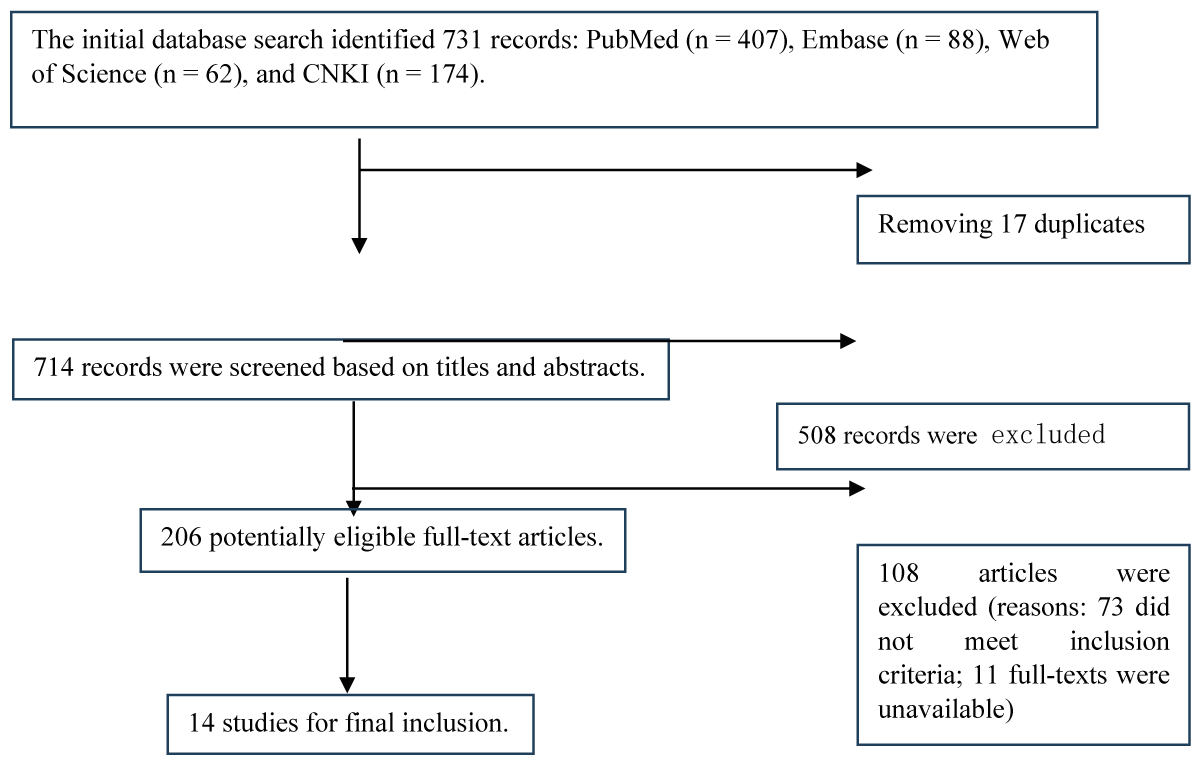
The initial search retrieved 731 records. After removing duplicates, 714 records remained. Screening of titles and abstracts led to the exclusion of 508 records. Following full-text assessment of the remaining 206 articles, 494 were excluded, resulting in 14 studies being included in the review. The study selection process is detailed in figure 2.
Characteristics of the included studies
A total of 14 studies were analyzed. The vast majority were randomized controlled trials (n = 13), while one study utilized a quasi-experimental design (Jiang, et al. 2019) [8]. These studies were conducted across seven countries, with China (n = 5) (Jiang, et al. 2019; Liu, et al. 2025; Shen, et al. 2022; Shen & Shi, 2019; Tao, 2022) [8-12] and Turkey (n = 2) (Belhan, et al. 2025; Turan, et al. 2025) [13,14] being the most represented. Sample sizes varied, ranging from 15 (Thistlethwaite, et al. 2018) [15] to 110 (Tao, 2022) [12] participants per study. The non-pharmacological interventions investigated were diverse and fell into several categories: physical therapies, psychological and behavioral interventions, advanced wound dressings, and novel care models. The primary PROs measured were pain, comfort, quality of life, and psychological well-being. A wide variety of validated PRO measurement instruments were employed across the studies. The full study characteristics are presented in table 1.
Type of intervention
The non-pharmacological interventions identified in the included studies were diverse and can be categorized into four primary types: Physical therapies, psychological and behavioral interventions, advanced wound dressings, and innovative care models.
Physical Therapies: Physical Therapies constituted a major category. These interventions applied external physical stimuli to modulate the wound environment and promote healing. Examples included the application of cold saline to mitigate procedural pain during diabetic foot ulcer debridement (Turan, et al. 2025) [14], hyperbaric oxygen therapy to restore the healing trajectory in chronic venous leg ulcers by improving tissue oxygenation (Thistlethwaite, et al. 2018) [15], and non-contact low-frequency ultrasound therapy which was associated with a reduction in adverse events (White, et al. 2015) [17]. Another study explored temperature modulation, finding that while heated saline solution did not significantly reduce pain intensity compared to room-temperature solution, it was consistently reported as the more comfortable and preferred option by patients (Galdino, et al. 2024) [20].
Psychological and behavioral interventions
Psychological and Behavioral Interventions focused on modulating the patient's mental state to improve coping mechanisms, reduce distress, and potentially influence healing. Techniques such as guided imagery (Ferreira, et al. 2023) [16], progressive muscle relaxation (Ferreira, et al. 2023; Pereira, et al. 2025) [16,19], and hypnotherapy were evaluated (Pereira, et al. 2025) [19], primarily in patients with diabetic foot ulcers. These interventions demonstrated promise in reducing emotional distress, improving disease-specific quality of life, and altering patients' perception of their ulcer threat. One study noted that relaxation interventions specifically contributed to sustainable improvements in ulcer healing (Pereira, et al. 2025) [19]. Virtual Reality was also trialed as a distractive intervention to manage pain and anxiety during wound care (Shen & Shi, 2019) [11]; however, one study found no significant effect, which may have been influenced by the advanced age of the participant cohort (Belhan, et al. 2025) [13].
Advanced wound dressings
Advanced Wound Dressings involved the use of sophisticated wound contact layers. One study investigated a chitosan-based hydrocolloid dressing, reporting benefits in reducing pain, alleviating wound itching, and accelerating the healing process in chronic refractory wounds compared to inert saline gauze (Liu & Shen, 2022) [21].
Innovative care models
Innovative Care Models re-engineered the delivery of care itself. These included multidisciplinary team (MDT) work models (Jiang, et al. 2019) [8], integrated continuing care (Liu, et al. 2025) [9], internet-based information platforms for home care (Shen, et al. 2022) [10], and the application of moist wound healing theory (Tao, 2022) [12]. These models consistently demonstrated superior outcomes compared to routine care. Benefits included shortened wound healing time, reduced pain scores, improved patient self-efficacy, enhanced self-management capability, better quality of life, higher patient satisfaction, and lower medical costs. The success of these models was attributed to more specialized, coordinated, and continuous patient support.
Discussion
This narrative review synthesized the current evidence on a diverse range of non-pharmacological interventions and their impact on Patient-Reported Outcomes (PROs) in chronic wound care. The principal finding is that these interventions, spanning physical therapies, psychological strategies, advanced dressings, and novel care models, collectively demonstrate a significant potential to improve the patient experience by alleviating pain, enhancing comfort and quality of life, and empowering self-efficacy (Kolimi, et al. 2022; Sio, et al. 2023; Yoon, et al. 2024) [22-24]. This underscores a paradigm shift in wound management from a primarily biological focus to a more holistic, patient-centered approach.
The analysis revealed that the effectiveness of specific interventions varies based on their mechanism of action and the PRO being measured. For instance, physical therapies like cold application and heated saline solution showed a direct benefit on procedural pain and immediate comfort during wound care, respectively (Galdino, et al. 2024; Turan, et al. 2025) [20,14]. In contrast, psychological interventions such as relaxation and guided imagery appeared to exert their primary influence on emotional distress, illness perception, and disease-specific quality of life, with some evidence suggesting a downstream effect on healing rates (Ferreira, et al. 2023; Pereira, et al. 2025) [16,19]. This delineation is critical for clinicians, as it suggests that a multifaceted approach, combining interventions that target both physical symptoms and psychosocial well-being, may be most effective in addressing the complex burden of chronic wounds.
A pivotal insight from this review is the powerful role of innovative care models. Interventions such as multidisciplinary teams and internet-based platforms consistently produced positive outcomes across multiple PRO domains, including pain, self-efficacy, and general quality of life (Liu, et al. 2025; Shen, et al. 2022; Liu & Shen, 2022) [9,10,21]. Their success likely stems from addressing systemic gaps in care continuity, patient education, and specialized support. These models do not merely introduce a new technology but fundamentally restructure care delivery to be more proactive, integrated, and supportive, thereby empowering patients in their long-term self-management journey (Lee, et al. 2025) [25].
However, the evidence is not without its limitations. The pronounced heterogeneity among the included studies in terms of intervention protocols, wound etiologies, and PRO measurement tools precludes definitive conclusions and complicates direct comparisons. Furthermore, several studies were limited by small sample sizes and short follow-up periods, potentially underpowering the detection of significant effects, particularly on long-term outcomes like complete healing and recurrence (Ferreira, et al. 2023; Thistlethwaite, et al. 2018) [16,15]. The reliance on a narrative synthesis, while appropriate for the diverse evidence base, highlights the need for future research employing more standardized methodologies to facilitate meta-analysis.
Conclusion
In conclusion, this review affirms that non-pharmacological interventions are a vital component of comprehensive chronic wound management. They offer tangible benefits for what matters most to patients: reducing suffering and improving daily life. Future research should prioritize robust, large-scale RCTs that utilize standardized PRO measures and investigate the synergistic effects of combining different types of non-pharmacological interventions to establish definitive, evidence-based guidelines for person-centered wound care.
References
- Bowers S, Franco E (2020) Chronic wounds: Evaluation and management. Am Fam Physician 101: 159-
- Falanga V, Isseroff RR, Soulika AM, et al. (2022). Chronic wounds. Nat Rev Dis Primers 8: 50.
- Fu X (2020) State policy for managing chronic skin wounds in China. Wound Repair Regen 28: 576-
- (2006) Guidance for industry: Patient-reported outcome measures: Use in medical product development to support labeling claims: Draft guidance. Health Qual Life Outcomes 4: 79.
- Cai M, Cui M, Nong Y, et al. (2022) A longitudinal study of trajectories and factors influencing patient-reported outcomes in chronic obstructive pulmonary disease. Int J Chron Obstruct Pulmon Dis 57: 29-35.
- Redmond MC, Gethin G, Finn DP (2025) A review of chronic wounds and their impact on negative affect, cognition, and quality of life. Int Wound J 22: e70748.
- Powers JG, Higham C, Broussard K, et al. (2016) Wound healing and treating wounds: Chronic wound care and management. J Am Acad Dermatol 74: 607-
- Jiang LN, Liu QL, Huang SP (2019) Application of multidisciplinary nursing team model in nursing of chronic wounds. China Urban and Rural Enterprise Health 34: 197-198.
- Liu N, Liu Q, An JH, et al. (2025) Application of integrated continuity care model in patients with chronic wounds. Journal of Nursing Research 39: 997-1000.
- Shen H, Sun RJ, Yang Y, et al. (2022) Practice of an internet-based information platform in home care services for difficult-to-heal wounds. Clinical Research 30: 185-188.
- Shen XX, Shi XL (2019) Analysis of the application value of VR technology combined with new wound dressings in chronic wounds in elderly patients. Electronic Journal of Practical Clinical Nursing Science 4: 104-105.
- Tao X (2022) The effect of moist wound theory nursing on patients with chronic wounds. Chinese and Foreign Medical Research 20: 111-114.
- Belhan Z, Muhan R, Aksoy ME, et al. (2025) Examining the effect of virtual reality application on pain and anxiety in the care of chronic wounds on the leg. J Tissue Viability 34.
- Turan M, Özbay H, Avsar M (2025) The impact of cold application on pain and comfort during the process of diabetic foot care. Diabetes Res Clin Pract 219.
- Thistlethwaite KR, Finlayson KJ, Cooper PD, et al. (2018) The effectiveness of hyperbaric oxygen therapy for healing chronic venous leg ulcers: A randomized, double-blind, placebo-controlled trial. Wound Repair Regen 26: 324-
- Ferreira G, Faria S, Carvalho A, et al. (2023) Relaxation intervention to improve diabetic foot ulcer healing: Results from a pilot randomized controlled study. Wound Repair Regen 31: 528-
- White J, Ivins N, Wilkes A, et al. (2015) Non-contact low-frequency ultrasound therapy compared with UK standard of care for venous leg ulcers: A single-centre, assessor-blinded, randomised controlled trial. International Wound Journal 13: 833-842.
- Kelechi TJ, Mueller M, Madisetti M, et al. (2022) Efficacy of a self-managed cooling intervention for pain and physical activity in individuals with recently healed chronic venous leg and diabetic foot ulcers: A randomized-controlled trial. J Wound Ostomy Continence Nurs 49: 365-372.
- Pereira MG, Vilaça M, Pedras S, et al. (2025) Effectiveness of relaxation and hypnosis interventions in distressed patients with chronic diabetic foot ulcers: A longitudinal pilot randomised controlled trial. Stress Health 41: e70029.
- Galdino H, de Oliveira Segundo EM, Malaquias SG, et al. (2024) Effect of heated saline solution on pain intensity, wound bed temperature, and comfort during chronic wound dressing changes: Crossover randomized clinical trial. Adv Skin Wound Care 37: 1-8.
- Liu J, Shen H (2022) Clinical efficacy of chitosan-based hydrocolloid dressing in the treatment of chronic refractory wounds. Int Wound J 19: 2012-
- Kolimi P, Narala S, Nyavanandi D, et al. (2022) Innovative treatment strategies to accelerate wound healing: Trajectory and recent advancements. Cells 11: 2439.
- Sio LCO, Hom B, Garg S, et al. (2023) Mechanism of action of peripheral nerve stimulation for chronic pain: A narrative review. Int J Mol Sci 24: 4540.
- Yoon SH, Huh BK, Abdi S, et al. (2024) The efficacy of high-intensity laser therapy in wound healing: A narrative review. Lasers Med Sci 39: 208.
- Lee YL, Lee HH, Chen CY, et al. (2025) User-centered chronic wound management system for team integration and patient participation. Stud Health Technol Inform 329: 1994-
Corresponding Author
Li Ke, Henan Provincial Hospital of Traditional Chinese Medicine, China.
Copyright
© 2025 Li Ke, et al. This is an open-access article distributed under the terms of the Creative Commons Attribution License, which permits unrestricted use, distribution, and reproduction in any medium, provided the original author and source are credited.