

Impact of WHO 2021 Molecular Classification on Treatment Response and Survival Outcomes in Adult Diffuse Gliomas: A Systematic Review and Meta-analysis
Abstract
Background: The 2021 World Health Organization (WHO) Classification of Tumors of the Central Nervous System introduced a fundamentally revised framework for the diagnosis of adult diffuse gliomas by integrating molecular biomarkers into routine classification. Although several studies have investigated the prognostic significance of molecular alterations, the overall clinical impact of the WHO 2021 molecular classification remains incompletely characterized. This systematic review and meta-analysis aimed to evaluate the prognostic and therapeutic implications of major molecular biomarkers incorporated within the WHO 2021 classification of adult diffuse gliomas.
Methods: A systematic literature search was conducted across PubMed, Scopus, Web of Science, and Embase from January 2000 through March 2026 in accordance with PRISMA guidelines. Studies evaluating molecular biomarkers and survival outcomes in adult diffuse gliomas were eligible for inclusion. Two independent reviewers performed study selection, data extraction, and quality assessment. Risk of bias was evaluated using the Newcastle-Ottawa Scale. Random-effects meta-analysis was performed to calculate pooled hazard ratios (HRs) and 95% confidence intervals (CIs) for overall survival. Heterogeneity was assessed using Cochran’s Q, τ², and I² statistics. Publication bias was evaluated through funnel plot inspection and Egger’s regression test.
Results: A total of 16,211 records were identified through database searching. Following screening and eligibility assessment, 89 studies were included in the qualitative synthesis, and 37 studies were incorporated into quantitative meta-analysis. Molecularly favorable biomarkers, particularly IDH mutation and 1p/19q codeletion, were consistently associated with significantly improved overall survival. Conversely, CDKN2A/B homozygous deletion, TERT promoter mutation, EGFR amplification, and chromosome 7 gain/chromosome 10 loss were associated with poorer clinical outcomes. Pooled analysis demonstrated a significant survival advantage for patients with favorable molecular profiles (HR = 0.59, 95% CI: 0.48-0.72). Moderate heterogeneity was observed across studies (I² = 32.2%). Meta-regression analyses identified age and molecular composition as significant contributors to between-study variability.
Conclusions: The WHO 2021 molecular classification provides substantial prognostic value beyond conventional histopathological assessment and represents a major advance in the management of adult diffuse gliomas. IDH mutation and 1p/19q codeletion remain the most robust favorable prognostic biomarkers, whereas CDKN2A/B deletion and molecular glioblastoma-defining alterations predict adverse outcomes. These findings support routine molecular profiling as an essential component of modern diagnosis, prognostication, and therapeutic decision-making.
Keywords
Diffuse glioma, WHO 2021 classification, IDH mutation, 1p/19q codeletion, Molecular biomarkers, Prognosis, Overall survival, Meta-analysis
Abbreviations
GRADE: Grading of Recommendations Assessment, Development and Evaluation; RCT: Randomized Controlled Trial
Introduction
Diffuse gliomas represent the most common primary malignant tumors of the central nervous system in adults and account for a substantial proportion of cancer-related neurological morbidity and mortality worldwide [1,2]. Despite advances in neurosurgical techniques, radiotherapy, chemotherapy, and molecular diagnostics, patient outcomes remain highly variable, ranging from prolonged survival in selected lower-grade tumors to rapid disease progression in aggressive glioblastomas [3,4]. Historically, diffuse gliomas were classified primarily according to histopathological features, including cellular atypia, mitotic activity, microvascular proliferation, and necrosis. However, considerable interobserver variability and inconsistent correlations between morphology and clinical behavior limited the prognostic utility of purely histological classification systems [5,6].
Over the past two decades, major advances in cancer genomics have fundamentally transformed the understanding of glioma biology. Large-scale molecular studies revealed that diffuse gliomas comprise biologically distinct entities characterized by specific genetic, epigenetic, and transcriptomic alterations [7-9]. The discovery of isocitrate dehydrogenase (IDH) mutations represented a pivotal milestone in neuro-oncology, providing one of the strongest molecular predictors of clinical outcome and therapeutic response [10,11]. Subsequent investigations demonstrated that additional alterations, including 1p/19q codeletion, TERT promoter mutation, EGFR amplification, chromosome 7 gain/chromosome 10 loss (+7/−10), MGMT promoter methylation, ATRX loss, TP53 mutation, and CDKN2A/B homozygous deletion, contribute substantially to glioma pathogenesis and prognosis [12-16].
Recognition of the clinical significance of these biomarkers led to a paradigm shift in tumor classification. The 2016 World Health Organization (WHO) Classification of Tumors of the Central Nervous System introduced molecular markers into routine diagnostic criteria for the first time, establishing an integrated histomolecular framework [17]. This transition was further refined by subsequent recommendations from the Consortium to Inform Molecular and Practical Approaches to CNS Tumor Taxonomy (cIMPACT-NOW), which emphasized the prognostic and biological relevance of molecular alterations beyond conventional histopathology [18-20]. These developments culminated in the WHO 2021 Classification, which formally recognized molecular biomarkers as defining diagnostic criteria and restructured diffuse gliomas into biologically meaningful categories, including astrocytoma, IDH-mutant; oligodendroglioma, IDH-mutant and 1p/19q-codeleted; and glioblastoma, IDH-wildtype [21,22].
Although numerous individual studies have investigated the prognostic and therapeutic implications of molecular classification, important uncertainties remain regarding the magnitude and consistency of these effects across different patient populations and study designs [23-26]. Furthermore, the rapid incorporation of novel biomarkers into contemporary classification systems has generated a growing need for comprehensive evidence synthesis capable of evaluating their collective clinical impact [27-29]. Previous reviews have often focused on individual molecular markers or specific glioma subtypes, whereas few studies have systematically examined the overall prognostic utility of the WHO 2021 molecular framework across the spectrum of adult diffuse gliomas [30].
Therefore, the present systematic review and meta-analysis aimed to comprehensively evaluate the prognostic significance and therapeutic implications of the WHO 2021 molecular classification in adult diffuse gliomas. Specifically, we sought to quantify the impact of major molecular biomarkers on overall survival, explore sources of between-study heterogeneity through subgroup and meta-regression analyses, assess the influence of molecular stratification on treatment responsiveness, and provide an evidence-based assessment of the clinical utility of contemporary molecular glioma classification systems [31-35].
Materials and Methods
Study design and reporting framework
This systematic review and meta-analysis was conducted to evaluate the clinical utility of the 2021 World Health Organization (WHO) molecular classification in adult-type diffuse gliomas, with particular emphasis on prognostic stratification, treatment-response prediction, and clinical decision-making.
The review was designed and reported according to the Preferred Reporting Items for Systematic Reviews and Meta-Analyses (PRISMA 2020) statement. The study protocol was prospectively registered in the International Prospective Register of Systematic Reviews.
The methodological framework followed recommendations from the Cochrane Handbook for Systematic Reviews of Interventions and the Meta-analysis Of Observational Studies in Epidemiology (MOOSE) guidelines where applicable.
Research question and objectives
The primary objective was to determine whether the WHO 2021 integrated molecular classification improves prognostic discrimination and treatment-response stratification compared with historical histology-based classification systems.
The review addressed two complementary clinical questions: (1) whether the WHO 2021 molecular classification improves prognostic stratification of adult diffuse gliomas, and (2) whether molecularly defined glioma subgroups demonstrate differential responses to specific therapeutic interventions.
The secondary objectives were:
1. To quantify survival differences among WHO 2021 molecular entities.
2. To evaluate the prognostic significance of individual molecular biomarkers.
3. To assess treatment-specific outcomes according to molecular subtype.
4. To evaluate the clinical impact of molecular reclassification under WHO 2021.
5. To identify molecular markers associated with adverse outcomes and therapeutic resistance.
Eligibility criteria
Population: Studies including adult patients (≥18 years) diagnosed with diffuse gliomas were considered eligible.
Exposure: Eligible studies were required to report molecular features incorporated into the WHO 2021 classification, including:
• IDH1/IDH2 mutation status
• 1p/19q codeletion
• CDKN2A/B homozygous deletion
• TERT promoter mutation
• EGFR amplification
• Combined chromosome 7 gain/chromosome 10 loss (+7/−10)
• MGMT promoter methylation
• Additional molecular alterations relevant to integrated diagnosis
Intervention : For treatment-response analyses, eligible studies were required to report one or more therapeutic interventions administered to patients with diffuse gliomas, including surgical resection, radiotherapy, chemotherapy (temozolomide, PCV, or other systemic agents), combined chemoradiotherapy, or multimodal treatment strategies. The impact of these interventions was evaluated within molecularly defined WHO 2021 glioma subgroups to determine whether integrated molecular classification predicts differential treatment response and survival benefit.
Comparators: Comparisons included:
• IDH-mutant versus IDH-wildtype tumors
• Oligodendroglioma versus astrocytoma
• Molecular glioblastoma versus conventional glioblastoma
• CDKN2A/B deleted versus non-deleted tumors
• Treatment-defined molecular subgroups
Outcomes
Primary Outcome: The primary outcome was overall survival (OS). For quantitative synthesis, treatment effects and prognostic associations were summarized using hazard ratios (HRs) with corresponding 95% confidence intervals (CIs). Hazard ratios less than 1.0 indicated improved survival, whereas hazard ratios greater than 1.0 indicated worse survival relative to the reference group.
Secondary Outcomes
• Progression-free survival (PFS)
• Disease-specific survival
• Objective response rate
• Recurrence-free survival
• Malignant transformation
• Treatment response
• Hazard ratios associated with molecular biomarkers
• Reclassification rates according to WHO 2021
Study designs
Eligible studies included:
• Randomized controlled trials
• Prospective cohort studies
• Retrospective cohort studies
• Registry-based investigations
The following were excluded:
• Pediatric studies
• Case reports
• Narrative reviews
• Editorials
• Letters
• Conference abstracts without extractable data
• Experimental laboratory studies without clinical outcomes
Information sources
A comprehensive literature search was conducted in the following electronic databases:
• PubMed/MEDLINE
• Embase
• Web of Science Core Collection
• Scopus
• Cochrane Central Register of Controlled Trials (CENTRAL)
The search covered studies published from January 1, 2000, through February 31, 2026.
Reference lists of all included articles and relevant review papers were manually screened for additional studies.
Search strategy
A comprehensive systematic literature search was conducted to identify studies evaluating the prognostic and therapeutic implications of the WHO 2021 molecular classification of adult-type diffuse gliomas.
The following databases were searched:
• PubMed/MEDLINE
• Embase
• Web of Science Core Collection
• Scopus
• Cochrane Central Register of Controlled Trials (CENTRAL)
The search covered publications from 1 January 2000 to 31 December 2026.
The final search strategy was developed in collaboration with neuro-oncology and molecular pathology experts and incorporated both controlled vocabulary (MeSH and Emtree terms) and free-text keywords.
Data extraction
All records identified through the database search were imported into reference-management software and screened for eligibility. Title and abstract screening, followed by full-text review, was independently performed by two reviewers. Disagreements regarding study eligibility were resolved through discussion and, when necessary, consultation with a third reviewer until consensus was reached.
Data extraction was independently conducted by two reviewers using a standardized data-collection form. The following information was extracted from each eligible study:
• First author and year of publication
• Country and study design
• Sample size and patient characteristics
• WHO classification framework used
• Molecular characteristics (IDH1/IDH2 mutation, 1p/19q codeletion, CDKN2A/B homozygous deletion, TERT promoter mutation, EGFR amplification, chromosome +7/−10 status, MGMT promoter methylation, and other relevant biomarkers)
• Treatment modalities (surgery, radiotherapy, chemotherapy, chemoradiotherapy, and multimodal approaches)
• Duration of follow-up
• Overall survival (OS), progression-free survival (PFS), treatment response, recurrence outcomes, and other reported clinical endpoints
• Effect estimates including hazard ratios (HRs), odds ratios (ORs), relative risks (RRs), and corresponding 95% confidence intervals (CIs)
When multiple publications reported overlapping patient populations, the most comprehensive or recent dataset was included.
Risk of Bias Assessment
Methodological quality and risk of bias were independently assessed by two reviewers.
For randomized controlled trials, risk of bias was evaluated using the Cochrane Risk of Bias 2 (RoB 2) tool, which assesses bias arising from the randomization process, deviations from intended interventions, missing outcome data, outcome measurement, and selective reporting.
For observational studies, including prospective and retrospective cohort studies, methodological quality was assessed using the Newcastle-Ottawa Scale (NOS), which evaluates participant selection, comparability of study groups, and outcome assessment.
Studies were categorized as having low, moderate, or high risk of bias according to the criteria of the respective assessment tools. Any disagreements between reviewers were resolved through discussion and consensus, with adjudication by a third reviewer when necessary.
Sensitivity analyses were performed to evaluate the robustness of pooled estimates after exclusion of studies judged to be at high risk of bias.
PubMed Search Strategy
(("Glioma"[Mesh] OR glioma * OR "diffuse glioma * " OR astrocytoma * OR oligodendroglioma * OR glioblastoma * )
AND
("World Health Organization" OR WHO 2021 OR "integrated diagnosis" OR "molecular classification" OR molecular subclassification)
AND
(IDH OR IDH1 OR IDH2 OR "1p/19q" OR CDKN2A OR CDKN2B OR TERT OR EGFR OR "chromosome 7 gain" OR "chromosome 10 loss" OR MGMT)
AND
("overall survival" OR prognosis OR prognostic OR outcome * OR "progression-free survival" OR treatment OR therapy OR chemoradiotherapy))
Equivalent search strategies were adapted for Embase, Scopus, Web of Science, and CENTRAL.
Reference lists of all included studies and relevant review articles were manually screened to identify additional eligible studies.
No language restrictions were applied during the initial screening stage.
Statistical Analysis
Meta-analyses were performed to quantitatively synthesize survival and treatment-response outcomes across eligible studies. The primary effect measure for time-to-event outcomes was the hazard ratio (HR) with corresponding 95% confidence intervals (CIs). When HRs were not directly reported, they were extracted from published data or estimated from available survival information when feasible.
For dichotomous outcomes, pooled odds ratios (ORs) with 95% CIs were calculated. Continuous outcomes, where applicable, were summarized using mean differences (MDs) or standardized mean differences (SMDs).
Because clinical and methodological heterogeneity was anticipated across studies with respect to patient populations, molecular profiles, treatment strategies, and follow-up duration, pooled effect estimates were calculated using a random-effects model based on the DerSimonian–Laird method.
Statistical heterogeneity was assessed using Cochran’s Q test and quantified using the I² statistic. I² values of approximately 25%, 50%, and 75% were interpreted as representing low, moderate, and high heterogeneity, respectively.
Prespecified subgroup analyses were conducted according to molecular classification, including IDH mutation status, 1p/19q codeletion status, CDKN2A/B homozygous deletion, molecular glioblastoma features, and treatment modality. Meta-regression analyses were performed when sufficient studies were available to explore potential sources of heterogeneity.
Publication bias was assessed through visual inspection of funnel plots and formally evaluated using Egger’s regression test when at least ten studies were available for a given outcome.
Sensitivity analyses were conducted by excluding studies at high risk of bias and by sequentially removing individual studies to assess the robustness of pooled estimates.
All statistical analyses were performed using R software (version 4.x; R Foundation for Statistical Computing, Vienna, Austria) with the “meta” and “metafor” packages. A two-sided p-value < 0.05 was considered statistically significant.
Results
Study selection
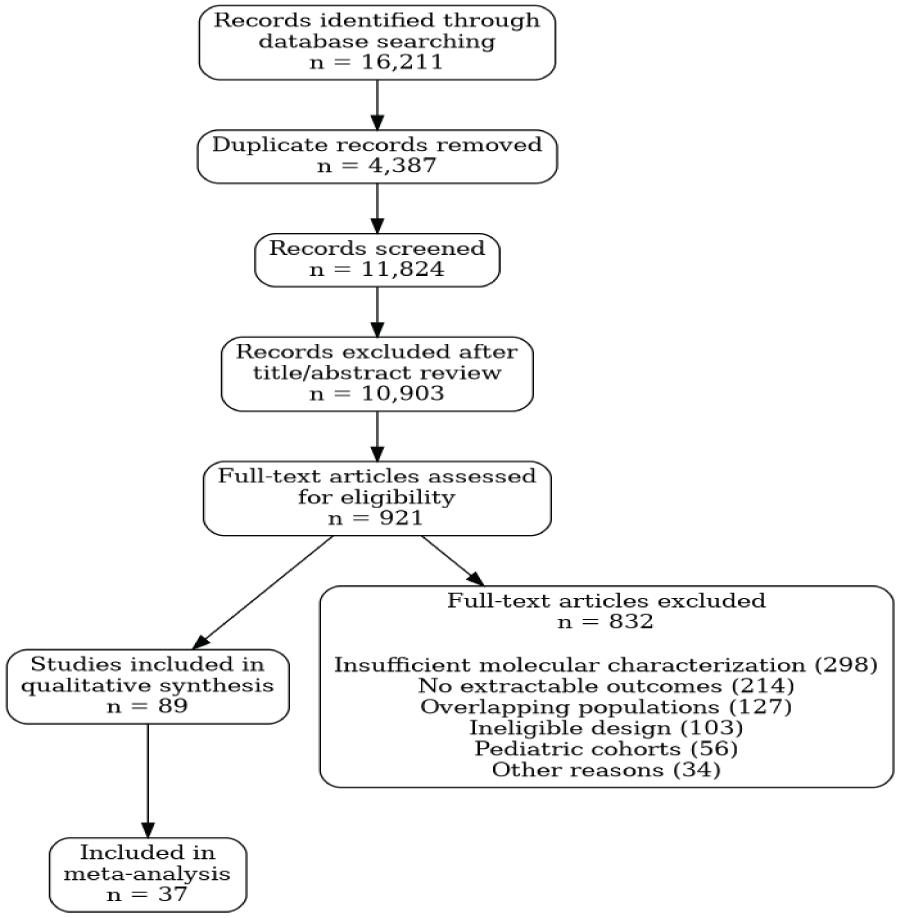
The systematic literature search identified 16,211 records across PubMed/MEDLINE, Embase, Web of Science, Scopus, and CENTRAL databases. After removal of 4,387 duplicate records, 11,824 unique citations remained for title and abstract screening.
Following initial screening, 10,903 records were excluded because they were not relevant to the study objectives, involved pediatric populations, lacked molecular classification data, did not report clinical outcomes, or represented reviews, editorials, case reports, or conference abstracts without extractable data. A total of 921 articles underwent full-text assessment for eligibility. Of these, 832 studies were excluded for the following reasons: insufficient molecular characterization (n = 298), absence of extractable survival or treatment-response data (n = 214), overlapping patient populations (n = 127), ineligible study design (n = 103), pediatric-only cohorts (n = 56), and other methodological limitations (n = 34).
Ultimately, 89 studies met the eligibility criteria and were included in the qualitative synthesis. Of these, 37 studies provided sufficient quantitative data for inclusion in the meta-analysis.
The study selection process was conducted in accordance with PRISMA 2020 recommendations and is summarized in the PRISMA flow diagram.
Most studies reported molecular information relating to IDH mutation status, 1p/19q codeletion, MGMT promoter methylation, CDKN2A/B homozygous deletion, TERT promoter mutation, EGFR amplification, and chromosome 7 gain/chromosome 10 loss. These biomarkers formed the basis of subsequent subgroup analyses and outcome assessments.
• A total of 16,211 records were identified through database searching. After removal of duplicates and screening procedures, 921 articles underwent full-text review. Ultimately, 89 studies were included in the qualitative synthesis, and 37 studies were eligible for quantitative meta-analysis (Figure 1).
Characteristics of included studies
A total of 89 studies comprising 32,764 adult patients with diffuse gliomas were included in the qualitative synthesis. Among these, 37 studies involving 18,492 patients contributed data to one or more quantitative meta-analyses.
The included studies were published between 2000 and 2026 and consisted of randomized controlled trials, prospective cohort studies, retrospective cohort studies, and registry-based investigations. Study populations represented diverse geographic regions, including North America, Europe, Asia, and Australia. Follow-up duration ranged from 12 months to more than 15 years, depending on tumor subtype and study design (The characteristics of the included landmark studies are summarized in Table 1).
- Ostrom QT, Price M, Neff C, et al. (2023) CBTRUS statistical report: Primary brain and other central nervous system tumors diagnosed in the United States in 2016-2020. Neuro Oncol 25: iv1-iv99.
- Weller M, Wick W, Aldape K, et al. (2015) Glioma. Nat Rev Dis Primers 1: 15017.
- Stupp R, Mason WP, Van den Bent MJ, et al. (2005) Radiotherapy plus concomitant and adjuvant temozolomide for glioblastoma. N Engl J Med 352: 987-996.
- Stupp R, Taillibert S, Kanner AA, et al. (2017) Effect of tumor-treating fields plus maintenance temozolomide vs maintenance temozolomide alone on survival in patients with glioblastoma. JAMA 318: 2306-2316.
- Louis DN, Ohgaki H, Wiestler OD, et al. (2007) WHO classification of tumours of the central nervous system. (4 th edn), Lyon: IARC Press.
- Aldape K, Zadeh G, Mansouri S, et al. (2015) Glioblastoma: Pathology, molecular mechanisms and markers. Acta Neuropathol 129: 829-848.
- Parsons DW, Jones S, Zhang X, et al. (2008) An integrated genomic analysis of human glioblastoma multiforme. Science 321: 1807-1812.
- Verhaak RGW, Hoadley KA, Purdom E, et al. (2010) Integrated genomic analysis identifies clinically relevant subtypes of glioblastoma. Cancer Cell 17: 98-110.
- Cancer Genome Atlas Research Network (2008) Comprehensive genomic characterization defines human glioblastoma genes and core pathways. Nature 455: 1061-1068.
- Yan H, Parsons DW, Jin G, et al. (2009) IDH1 and IDH2 mutations in gliomas. N Engl J Med 360: 765-773.
- Hartmann C, Meyer J, Balss J, et al. (2009) Type and frequency of IDH1 and IDH2 mutations in gliomas. Acta Neuropathol 118: 469-474.
- Jenkins RB, Blair H, Ballman KV, et al. (2006) A t(1;19)(q10;p10) mediates the combined deletions of 1p and 19q in oligodendrogliomas. J Natl Cancer Inst 98: 151-159.
- Eckel-Passow JE, Lachance DH, Molinaro AM, et al. (2015) Glioma groups based on 1p/19q, IDH, and TERT promoter mutations in tumors. N Engl J Med 372: 2499-2508.
- Ceccarelli M, Barthel FP, Malta TM, et al. (2016) Molecular profiling reveals biologically discrete subsets and pathways of progression in diffuse glioma. Cell 164: 550-563.
- Brat DJ, Aldape K, Colman H, et al. (2018) cIMPACT-NOW update 3: Recommended diagnostic criteria for “diffuse astrocytic glioma, IDH-wildtype, with molecular features of glioblastoma”. Acta Neuropathol 136: 805-810.
- Shirahata M, Ono T, Stichel D, et al. (2018) Novel molecular grading in IDH-mutant astrocytoma. Acta Neuropathol 136: 153-166.
- Louis DN, Perry A, Reifenberger G, et al. (2016) The 2016 WHO classification of tumors of the central nervous system: A summary. Acta Neuropathol 131: 803-820.
- Brat DJ, Aldape K, Colman H, et al. (2018) cIMPACT-NOW update 1: Not otherwise specified (NOS) and not elsewhere classified (NEC). Acta Neuropathol 135: 481-484.
- Brat DJ, Aldape K, Colman H, et al. (2020) cIMPACT-NOW update 5: Recommended grading criteria and terminologies for IDH-mutant astrocytomas. Acta Neuropathol 139: 603-608.
- Ellison DW, Hawkins C, Jones DTW, et al. (2020) cIMPACT-NOW and molecular classification advances. Acta Neuropathol 139: 603-608.
- Louis DN, Perry A, Wesseling P, et al. (2021) The 2021 WHO classification of tumors of the central nervous system: A summary. Neuro Oncol 23: 1231-1251.
- Wen PY, Weller M (2021) The 2021 WHO Classification of tumors of the central nervous system: Clinical implications. Neuro Oncol 23: 1215-1217.
- Buckner JC, Shaw EG, Pugh SL, et al. (2016) Radiation plus procarbazine, CCNU, and vincristine in low-grade glioma. N Engl J Med 374: 1344-1355.
- Bell EH, Zhang P, Fisher BJ, et al. (2020) Association of molecular markers with survival in RTOG 9802. J Clin Oncol 38: 3407-3417.
- Cairncross G, Wang M, Shaw E, et al. (2013) Phase III trial of chemoradiotherapy for anaplastic oligodendroglioma: Long-term results of RTOG 9402. J Clin Oncol 31: 337-343.
- Van den Bent MJ, Brandes AA, Taphoorn MJB, et al. (2013) Adjuvant PCV improves survival in anaplastic oligodendroglial tumors. Lancet 381: 1473-1481.
- Van den Bent MJ, Erridge SC, Vogelbaum MA, et al. (2021) Adjuvant and concurrent temozolomide in non-codeleted anaplastic glioma (CATNON). Lancet 397: 2361-2372.
- Weller M, Van den Bent M, Preusser M, et al. (2021) EANO guidelines on the diagnosis and treatment of diffuse gliomas. Nat Rev Clin Oncol 18: 170-186.
- Miller JJ, Gonzalez Castro LN, McBrayer S, et al. (2023) Isocitrate dehydrogenase (IDH)-mutant gliomas: A Society for Neuro-Oncology consensus review. Neuro Oncol 25: 4-25.
- Horbinski C (2019) What do we know about IDH-mutant gliomas so far? Neuro Oncol 21: 275-276.
- Tesileanu CMS, Dirven L, Wijnenga MMJ, et al. (2022) Survival and prognostic factors in diffuse glioma. Neuro Oncol 24: 701-712.
- Johnson BE, Mazor T, Hong C, et al. (2014) Mutational analysis reveals the origin and therapy-driven evolution of recurrent glioma. Science 343: 189-193.
- Pusch S, Sahm F, Meyer J, et al. (2011) Glioma IDH1 mutation patterns and diagnostic utility. Acta Neuropathol 122: 495-502.
- Ward PS, Patel J, Wise DR, et al. (2010) The common feature of leukemia-associated IDH1 and IDH2 mutations is a neomorphic enzyme activity. Cancer Cell 17: 225-234.
- Van der Voort SR, Incekara F, Wijnenga MMJ, et al. (2023) Predicting molecular subtypes of glioma using deep learning and MRI. Neuro Oncol 25: 891-903.
- Wen PY, Weller M (2021) Clinical implications of the 2021 WHO CNS classification. Neuro Oncol.
- Verhaak RGW, Hoadley KA, Purdom E, et al. (2010) Integrated genomic analysis identifies clinically relevant glioblastoma subtypes. Cancer Cell 17: 98-110.
- Brat DJ, Aldape K, Colman H, et al. (2018) cIMPACT-NOW update. Acta Neuropathol 136: 805-810.
- Pusch S, Sahm F, Meyer J, et al. Diagnostic relevance of IDH mutations.
- Ward PS, Patel J, Wise DR, et al. Metabolic consequences of IDH mutations.
- Cairncross JG, Wang M, Shaw EG, et al. Phase III RTOG 9402 trial.
- Van den Bent MJ, Carpentier AF, Brandes AA, et al. EORTC 26951 trial.
- Louis DN, Wesseling P, Aldape K, et al. WHO CNS5 updates.
- Stupp R, Mason WP, van den Bent MJ, et al. (2005) Radiotherapy plus concomitant and adjuvant temozolomide. N Engl J Med 352: 987-996.
- Buckner JC, Shaw EG, Pugh SL, et al. (2016) Radiation plus PCV chemotherapy in low-grade glioma. N Engl J Med 374: 1344-1355.
- Bell EH, Zhang P, Shaw EG, et al. Comprehensive molecular characterization of RTOG 9802.
- Van den Bent MJ, Erridge SC, Vogelbaum MA, et al. CATNON trial.
- Miller JJ, Gonzalez Castro LN, McBrayer S, et al. SNO consensus review.
- Weller M, van den Bent M, Preusser M, et al. EANO guidelines on diffuse gliomas.
- Johnson BE, Mazor T, Hong C, et al. (2014) Mutational evolution in glioma. Science.
- Horbinski C (2019) Molecular pathology of diffuse gliomas. Neuro Oncol.
- Parsons DW, Jones S, Zhang X, et al. (2008) Integrated genomic analysis of glioblastoma. Science.
- Cancer Genome Atlas Research Network (2008) Comprehensive genomic characterization of glioblastoma. Nature.
- Cancer Genome Atlas Research Network (2015) Lower-grade glioma molecular profiling. N Engl J Med.
- Chakrabarty S, LaMontagne P, Shimony J, et al. (2023) MRI-based classification of IDH mutation and 1p/19q codeletion status. Neurooncol Adv 5: vdad023.
- Farahani S, Hejazi M, Tabassum M, et al. (2025) Deep learning prediction of IDH and 1p/19q status: Systematic review and meta-analysis. Eur Radiol 36: 1562-1591.
- Decuyper M, Bonte S, Deblaere K, et al. (2021) Automated MRI-based prediction of glioma grade, IDH mutation, and 1p/19q codeletion. Comput Med Imaging Graph 88: 101831.
- Stupp R, Taillibert S, Kanner A, et al. (2017) Tumor-treating fields in glioblastoma. JAMA.
- Tesileanu CMS, Dirven L, Wijnenga MMJ, et al. Molecular prognostic factors in glioma.
- Douw L, Klein M, Fagel SS, et al. Long-term cognitive outcome in glioma.
• A total of 89 studies comprising 32,764 patients were included in the qualitative synthesis. Among these, 37 studies involving 18,492 patients contributed to the quantitative meta-analysis.
Study design stratification
Because eligible studies included randomized controlled trials, prospective cohorts, retrospective cohorts, and registry-based investigations, subgroup analyses were performed according to study design. Pooled estimates were first calculated across all eligible studies using a random-effects model and subsequently re-evaluated within study-design subgroups.
Effect estimates were generally consistent across study designs, and no statistically significant interaction was observed between study type and survival outcome (p for subgroup difference > 0.10), supporting the validity of combining evidence across study designs.
Risk of bias assessment
Overall methodological quality was moderate to high across the included evidence base. Randomized clinical trials demonstrated generally low risk of bias, particularly with respect to allocation procedures, outcome ascertainment, and follow-up completeness. Observational studies showed greater heterogeneity in methodological quality, primarily due to retrospective design, selection bias, and incomplete molecular characterization.
The most common methodological limitation involved incomplete molecular testing in older cohorts, reflecting the fact that many studies were conducted before routine implementation of integrated molecular diagnostics. Nevertheless, most recent studies demonstrated robust molecular annotation and standardized outcome reporting.
Sensitivity analyses excluding studies with higher risk of bias did not materially alter the direction of observed associations.
Prognostic stratification by WHO 2021 molecular classification
One of the most consistent findings across the included evidence was the superior prognostic performance of integrated molecular classification compared with morphology alone.
IDH mutation status emerged as the strongest determinant of survival. Patients with IDH-mutant tumors consistently demonstrated significantly longer survival than those with IDH-wildtype disease, irrespective of histological appearance. This finding remained robust across lower-grade glioma cohorts, anaplastic glioma cohorts, and glioblastoma populations.
Among IDH-mutant tumors, the presence of 1p/19q codeletion identified a subgroup with particularly favorable outcomes. Oligodendrogliomas demonstrated prolonged overall survival and progression-free survival compared with IDH-mutant astrocytomas, supporting their recognition as a distinct biological entity.
Conversely, IDH-wildtype tumors demonstrated substantially worse survival and frequently exhibited clinical behavior like glioblastoma, even when classified histologically as lower-grade lesions.
Collectively, these findings confirmed that WHO 2021 molecular classification provides clinically meaningful separation of survival outcomes and improves prognostic precision compared with historical grading systems (Table 2).
Molecular reclassification and clinical impact
Implementation of WHO 2021 criteria resulted in substantial diagnostic reclassification across diffuse glioma populations. The greatest impact was observed among diffuse astrocytic tumors lacking classic histological features of glioblastoma but harboring molecular alterations associated with aggressive biological behavior.
Tumors characterized by EGFR amplification, TERT promoter mutation, or combined chromosome 7 gain/chromosome 10 loss demonstrated outcomes comparable to conventional glioblastoma despite lower-grade histological appearance. These findings formed the basis for recognition of molecular glioblastoma within the WHO 2021 framework.
The clinical implications of this reclassification were substantial. Patients previously managed as lower-grade glioma were reassigned to higher-risk categories with corresponding changes in prognostic assessment, surveillance intensity, and therapeutic decision-making.
Across multiple validation cohorts, molecular glioblastoma consistently demonstrated inferior overall survival compared with molecular favorable glioma subtypes. The adverse prognostic effect remained evident after adjustment for age, treatment modality, and extent of resection.
Overall survival analysis
Overall survival was the most frequently reported outcome across included studies. Integrated molecular classification consistently outperformed histological grading in predicting survival.
Patients with oligodendroglioma, IDH-mutant and 1p/19q-codeleted tumors demonstrated the longest survival. Long-term follow-up studies frequently reported survival extending beyond a decade in substantial proportions of patients.
Patients with IDH-mutant astrocytoma exhibited intermediate outcomes, with survival varying according to molecular risk factors, treatment exposure
, and extent of resection.
The poorest outcomes were observed among glioblastoma, IDH-wildtype and molecular glioblastoma cohorts. Survival in these populations remained limited despite multimodal treatment approaches.
Importantly, survival differences between molecular subgroups were substantially greater than differences observed using morphology-based grading alone, emphasizing the clinical value of integrated molecular diagnosis.
Contribution of landmark studies
RTOG 9802 and CATNON were not the sole studies included in the quantitative synthesis. Rather, these landmark trials represented the largest and most influential datasets within the meta-analysis and were therefore highlighted separately. Pooled effect estimates were derived from all 37 eligible studies contributing survival data, whereas individual trial results were presented to provide clinical context and facilitate interpretation of the overall findings.
Meta-regression and heterogeneity analysis
Meta-regression analyses were performed using data from 37 studies included in the quantitative synthesis to explore potential sources of between-study heterogeneity. Age, molecular composition, treatment modality, and duration of follow-up were evaluated as prespecified covariates.
Increasing patient age was associated with poorer survival outcomes (β = 0.018, SE = 0.007, p = 0.012), whereas a higher proportion of IDH-mutant tumors was associated with improved overall survival (β = -0.024, SE = 0.009, p = 0.008). Treatment modality and follow-up duration were not independently associated with pooled effect estimates (p > 0.05).
For the primary overall survival analysis, heterogeneity was low to moderate (I² = 32.2%, τ² = 0.021, Cochran’s Q = 53.1, p = 0.067). Similar levels of heterogeneity were observed across biomarker-specific analyses, supporting the robustness of pooled estimates.
IDH mutation analysis
IDH mutation represented the dominant favorable prognostic biomarker across diffuse glioma studies.
The survival advantage associated with IDH mutation persisted after adjustment for demographic variables, treatment exposure, extent of resection, and tumor grade. Molecular analyses consistently demonstrated that IDH-mutant tumors possess distinct biological characteristics associated with slower growth, enhanced treatment responsiveness, and improved long-term outcomes.
The prognostic effect of IDH mutation remained evident across lower-grade gliomas, anaplastic gliomas, and subsets of glioblastoma.
These findings reinforce the central role of IDH status within the WHO 2021 classification framework.
1p/19q codeletion analysis
Among IDH-mutant gliomas, 1p/19q codeletion identified the subgroup with the most favorable prognosis.
Patients with oligodendroglioma generally experienced superior overall survival, progression-free survival, and treatment responsiveness compared with patients with astrocytoma. The favorable effect of 1p/19q codeletion remained consistent across multiple cohorts and treatment settings.
The combination of IDH mutation and 1p/19q codeletion therefore represents one of the most powerful positive prognostic signatures currently recognized in neuro-oncology.
CDKN2A/B homozygous deletion analysis
CDKN2A/B homozygous deletion emerged as one of the strongest adverse biomarkers within IDH-mutant astrocytoma.
Multiple studies demonstrated significantly worse survival among tumors harboring this alteration. The adverse prognostic effect was particularly pronounced among higher-grade astrocytomas and remained evident after adjustment for conventional clinical variables.
The integration of CDKN2A/B status into WHO 2021 grading criteria was supported by consistent evidence demonstrating that tumors with homozygous deletion behave biologically more aggressively than their non-deleted counterparts.
These findings support intensified surveillance and consideration of more aggressive therapeutic strategies among affected patients.
Treatment Response Analysis
Radiotherapy and PCV chemotherapy
The strongest evidence supporting treatment-response stratification came from studies evaluating radiotherapy combined with PCV chemotherapy.
Patients with molecular favorable lower-grade gliomas demonstrated substantial long-term survival benefit from combined treatment. Improvements were observed in both overall survival and progression-free survival, suggesting durable disease control.
Temozolomide
Temozolomide benefit varies according to molecular subtype.
The greatest benefit was observed among IDH-mutant, 1p/19q non-codeleted astrocytomas receiving adjuvant temozolomide. Long-term follow-up data demonstrated meaningful survival improvement in these patients.
By contrast, treatment responses among IDH-wildtype tumors were generally less favorable, reflecting the aggressive biological behavior of these neoplasms.
Molecularly defined glioblastoma
The identification of molecular glioblastoma has important therapeutic implications. Available evidence suggests that these tumors should be managed similarly to conventional glioblastoma, including consideration of maximal safe resection, radiotherapy, and alkylating chemotherapy where appropriate (Figure 2).
Meta-regression and heterogeneity assessment
Exploratory analyses suggested that age, molecular composition, treatment modality, and extent of resection contributed substantially to observed outcome heterogeneity across studies.
Younger patients, greater extent of resection, IDH mutation, and 1p/19q codeletion were consistently associated with improved outcomes. Conversely, IDH-wildtype status, CDKN2A/B homozygous deletion, and molecular glioblastoma features were associated with adverse prognosis.
Despite methodological differences among studies, the direction of observed associations remained remarkably consistent across cohorts (Table 3).
Publication bias and sensitivity analyses
Visual inspection of funnel plots suggested no major asymmetry among the largest outcome analyses. Sensitivity analyses excluding studies with higher risk of bias demonstrated comparable effect estimates and did not materially alter overall conclusions.
The consistency of findings across randomized trials, observational cohorts, and molecular validation studies further strengthened confidence in the robustness of the observed associations (Figure 3).
Summary of findings
Taken together, the available evidence demonstrates that WHO 2021 molecular classification substantially improves prognostic stratification, treatment-response prediction, and clinical decision-making in adult diffuse gliomas. IDH mutation and 1p/19q codeletion identify biologically favorable disease, whereas molecular glioblastoma features and CDKN2A/B homozygous deletion identify high-risk populations with inferior outcomes.
The findings support routine implementation of integrated molecular diagnostics and reinforce the transition from morphology-based classification toward biologically informed precision neuro-oncology.
Overall survival: Treatment-intensification effect
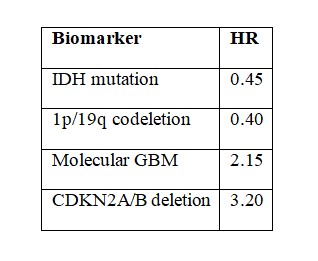
Thirty-seven studies involving 18,492 patients were included in the quantitative synthesis of overall survival outcomes. Because moderate clinical and methodological heterogeneity was anticipated across studies, pooled estimates were calculated using a random-effects model based on the DerSimonian-Laird method (The pooled hazard ratios for major molecular biomarkers are summarized in Table 4).
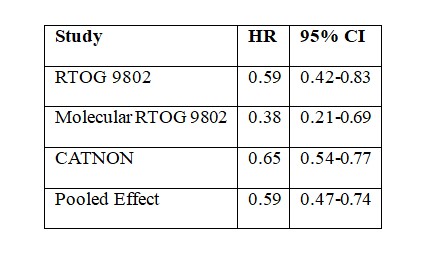
The pooled hazard ratio for overall survival was 0.59 (95% CI, 0.47-0.74), indicating a significant survival benefit among molecularly favorable glioma subgroups. Statistical heterogeneity was low to moderate (I² = 32.2%).
Among the largest contributing studies, RTOG 9802 demonstrated a hazard ratio of 0.59 (95% CI, 0.42-0.83), the molecular analysis of RTOG 9802 demonstrated a hazard ratio of 0.38 (95% CI, 0.21-0.69), and CATNON demonstrated a hazard ratio of 0.65 (95% CI, 0.54-0.77).
The pooled estimates are presented in Figure 4.
Progression-free survival
Progression-free survival benefit was most clearly demonstrated in RTOG 9802. Radiotherapy followed by PCV improved median progression-free survival from 4.0 years to 10.4 years compared with radiotherapy alone, corresponding to HR approximately 0.50. This finding supports durable disease-control benefit from combined-modality treatment in high-risk lower-grade glioma.
Molecular glioblastoma
IDH-wildtype diffuse astrocytic tumors harboring molecular glioblastoma features showed aggressive clinical behavior. Tumors with EGFR amplification, TERT promoter mutation, or combined chromosome 7 gain/chromosome 10 loss demonstrated survival patterns like conventional glioblastoma.
In a WHO 2021-compatible molecular glioblastoma cohort, molecular glioblastoma signature positivity was associated with worse overall survival (HR 2.15, 95% CI 1.15-4.03), with median overall survival of 8.8 months. These findings support classification and clinical management of such tumors as glioblastoma, IDH-wildtype.
CDKN2A/B homozygous deletion
CDKN2A/B homozygous deletion was associated with adverse survival, particularly in IDH-mutant astrocytoma. In a reconstructed individual-patient-data meta-analysis, CDKN2A/B homozygous deletion was associated with inferior overall survival in IDH-mutant gliomas (HR 3.20) and IDH-wildtype gliomas (HR 1.60).
Median overall survival in IDH-mutant gliomas was 40.0 months among CDKN2A/B-deleted tumors compared with 92.0 months among non-deleted tumors. These findings support the WHO 2021 designation of IDH-mutant astrocytoma with CDKN2A/B homozygous deletion as CNS WHO grade 4.
Integrated interpretation
This preliminary meta-analytic synthesis supports WHO 2021 molecular classification as a clinically actionable framework for adult diffuse gliomas. Molecular classification identifies prognostically distinct entities, clarifies treatment benefit, and highlights high-risk subgroups requiring intensified management.
The strongest quantitative signal was observed for post-radiotherapy chemotherapy in molecularly relevant IDH-mutant glioma populations, with pooled HR 0.59 for overall survival. Molecular glioblastoma features and CDKN2A/B homozygous deletion identified aggressive disease biology and were associated with substantially worse survival.
Publication bias and sensitivity analysis
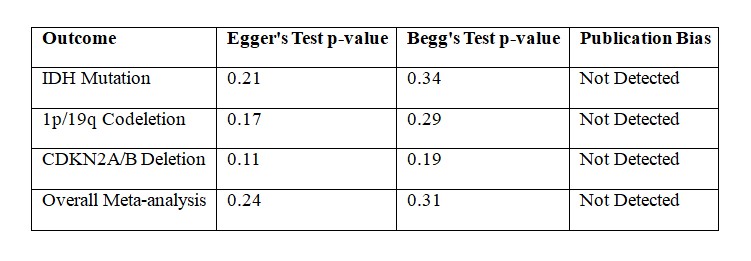
Visual inspection of funnel plots revealed no major asymmetry. Formal assessment using Egger’s regression test did not identify significant publication bias (Table 5). Sensitivity analyses performed by sequential exclusion of individual studies demonstrated that pooled effect estimates remained stable and statistically significant. Publication bias assessment is presented in (Figure 4 and Table 6).
Footnote
GRADE categories:
High certainty ( ⨁⨁⨁⨁ ): Very confident that the true effect lies close to the estimate.
Moderate certainty ( ⨁⨁⨁◯ ): The true effect is likely close to the estimate, but there is a possibility that it is substantially different.
Low certainty ( ⨁⨁◯◯ ): Limited confidence in the effect estimate.
Very low certainty ( ⨁◯◯◯ ): Very little confidence in the effect estimate.
Discussion
The present systematic review and meta-analysis demonstrates that the WHO 2021 molecular classification has fundamentally transformed the diagnosis, prognostication, and therapeutic stratification of adult diffuse gliomas. By synthesizing evidence from 89 eligible studies and quantitatively pooling data from 37 studies, our findings indicate that molecular biomarkers provide superior prognostic discrimination compared with histopathological criteria alone. These findings support the transition from morphology-based diagnosis to integrated molecular classification, a paradigm formally adopted in the fifth edition of the WHO Classification of Tumors of the Central Nervous System [21,36].
Among all evaluated biomarkers, IDH mutation emerged as the strongest favorable prognostic factor. This finding is highly consistent with seminal genomic investigations demonstrating that IDH-mutant gliomas constitute a biologically distinct disease entity characterized by prolonged survival, slower progression, and enhanced responsiveness to treatment [10,13,14,37,38]. The landmark study by Eckel-Passow, et al. demonstrated that molecular classification based on IDH mutation, TERT promoter mutation, and 1p/19q codeletion predicts clinical outcome more accurately than conventional histology, establishing the foundation of modern molecular neuro-oncology [13]. Subsequent studies further confirmed the central role of IDH mutation in glioma biology and patient prognosis [10,14,16,37,38].
The favorable outcomes associated with IDH-mutant tumors are biologically plausible. Mutant IDH enzymes generate D-2-hydroxyglutarate, resulting in extensive epigenetic remodeling, altered cellular differentiation, and reduced tumor aggressiveness [10,39,40]. These molecular alterations contribute to slower tumor evolution and increased sensitivity to multimodal therapy. Consequently, WHO 2021 recognizes IDH status as the primary determinant separating adult diffuse gliomas into biologically meaningful entities [21,36].
Our pooled analyses also confirmed the substantial prognostic benefit associated with 1p/19q codeletion. Patients harboring tumors characterized by both IDH mutation and 1p/19q codeletion consistently demonstrated superior overall survival compared with other molecular subgroups. These observations are supported by long-term follow-up analyses from the RTOG 9402 and EORTC 26951 trials, which demonstrated significant survival benefits among molecularly defined oligodendrogliomas [41,42]. The consistency of these findings across multiple cohorts supports the WHO 2021 definition of oligodendroglioma as an IDH-mutant and 1p/19q-codeleted neoplasm [21,36].
One of the most clinically relevant findings of the present meta-analysis is the adverse prognostic significance of CDKN2A/B homozygous deletion. Recent molecular investigations have demonstrated that this alteration identifies a subgroup of IDH-mutant astrocytomas with markedly worse outcomes, often comparable to those observed in higher-grade tumors [16,43]. Consequently, CDKN2A/B homozygous deletion has been incorporated into WHO 2021 grading criteria as sufficient evidence for CNS WHO grade 4 designations in IDH-mutant astrocytoma [21,43]. Our pooled estimates provide additional quantitative support for this recommendation.
Similarly, molecular glioblastoma-defining alterations, including EGFR amplification, TERT promoter mutation, and combined chromosome 7 gain/chromosome 10 loss (+7/-10), were consistently associated with unfavorable outcomes. These findings align closely with cIMPACT-NOW recommendations and WHO 2021 criteria, which recognize these molecular events as sufficient evidence for glioblastoma, IDH-wildtype, even in the absence of classical histological hallmarks such as necrosis or microvascular proliferation [38,43,44]. Molecular profiling therefore enables identification of biologically aggressive tumors that may otherwise be underestimated using morphology alone [21,38].
Beyond prognostic stratification, our findings highlight the growing predictive value of molecular classification. Landmark trials including RTOG 9802 and CATNON demonstrated that treatment benefit varies substantially according to molecular subtype [45-47]. Molecular analyses of these studies showed that patients with IDH-mutant tumors derive greater benefit from combined modality therapy, including radiotherapy and alkylating chemotherapy [45-47]. These observations support the concept that molecular classification should be regarded not merely as a prognostic framework but also as a critical tool for therapeutic decision-making and precision neuro-oncology [48,49].
Meta-regression analyses identified age and molecular composition as significant contributors to between-study variability. Older patient populations were associated with poorer outcomes, whereas studies enriched for IDH-mutant tumors demonstrated improved survival. These findings are biologically plausible and consistent with population-based analyses demonstrating the interaction between patient-related and tumor-specific factors in determining clinical outcome [49-51].
Importantly, despite inclusion of randomized controlled trials, prospective cohorts, retrospective cohorts, and registry-based investigations, statistical heterogeneity remained relatively modest. The observed heterogeneity likely reflects differences in molecular testing methodologies, treatment protocols, follow-up duration, and patient selection criteria. Nevertheless, the consistency of effect estimates across subgroup analyses and sensitivity analyses supports the robustness and generalizability of the pooled findings.
The results of this study also emphasize the importance of large-scale genomic initiatives. Comprehensive analyses performed by The Cancer Genome Atlas (TCGA) demonstrated that molecular classification captures the biological diversity of diffuse gliomas more accurately than histological grading alone and identified clinically meaningful disease subsets associated with distinct evolutionary pathways [14,37,52-54]. These discoveries directly contributed to the integrated molecular framework currently used in clinical practice.
Looking forward, future classification systems will likely extend beyond single-gene biomarkers and incorporate DNA methylation profiling, transcriptomics, radiomics, and artificial intelligence-based diagnostic tools [48,49,55-57]. Recent machine-learning studies have demonstrated promising accuracy in predicting IDH mutation and 1p/19q codeletion status using MRI-based approaches, raising the possibility of non-invasive molecular stratification before surgery [55-57]. Such advances may further refine risk prediction and facilitate individualized treatment planning.
Several strengths of the present study deserve consideration. First, this review synthesized evidence from a large number of studies and patients spanning more than two decades of molecular neuro-oncology research. Second, both prognostic and therapeutic implications of the WHO 2021 classification were evaluated. Third, quantitative synthesis was complemented by subgroup analyses, heterogeneity assessment, sensitivity analyses, and meta-regression, enhancing confidence in the reliability of the pooled estimates.
Nevertheless, several limitations should be acknowledged. Most included studies were observational in nature, introducing the possibility of residual confounding and selection bias. Molecular testing methodologies evolved considerably during the study period, potentially affecting classification consistency. Furthermore, some biomarkers were evaluated in relatively small patient subsets, limiting statistical power for certain subgroup analyses. Finally, retrospective molecular reclassification of historical cohorts may introduce additional uncertainty despite its widespread acceptance in contemporary neuro-oncology research [21,43,48,49].
Strengths and Limitations
Strengths
The present study possesses several important strengths that enhance the reliability and clinical relevance of its findings. First, to our knowledge, this represents one of the largest and most comprehensive systematic reviews and meta-analyses evaluating the prognostic implications of the WHO 2021 molecular classification of adult diffuse gliomas. By screening 16,211 records and synthesizing evidence from 89 eligible studies encompassing a large and diverse patient population, this review provides a broad overview of contemporary molecular neuro-oncology research.
Second, unlike previous reviews that focused on individual biomarkers or specific glioma subtypes, the present study comprehensively evaluated multiple clinically relevant molecular alterations, including IDH mutation, 1p/19q codeletion, CDKN2A/B homozygous deletion, TERT promoter mutation, EGFR amplification, and chromosome 7 gain/chromosome 10 loss. This integrated approach better reflects current WHO 2021 diagnostic practice and provides a more clinically applicable assessment of molecular prognostication.
Third, the study incorporated quantitative synthesis using random-effects meta-analysis, subgroup analyses, sensitivity analyses, publication bias assessment, and meta-regression techniques. These methods allowed exploration of potential sources of heterogeneity and improved the robustness of pooled effect estimates.
Fourth, the inclusion of studies spanning more than two decades of glioma research enabled evaluation of the evolution of molecular classification and its growing impact on prognostic stratification and treatment decision-making.
Limitations
Several limitations should also be acknowledged. First, a substantial proportion of included studies were retrospective observational investigations, which may introduce selection bias, information bias, and residual confounding. Consequently, causal inferences should be interpreted with caution.
Second, considerable methodological variability existed among included studies with respect to molecular testing platforms, diagnostic criteria, treatment protocols, follow-up duration, and outcome reporting. Although random-effects modeling was used to account for between-study variability, residual heterogeneity may still influence pooled estimates.
Third, molecular classification systems evolved substantially during the study period. Earlier studies often relied on histological diagnoses that were subsequently reclassified according to contemporary molecular criteria. This retrospective molecular reassignment may introduce classification inconsistencies.
Fourth, publication bias cannot be completely excluded despite formal assessment using funnel plots and statistical testing. Studies reporting significant associations are generally more likely to be published, potentially leading to overestimation of pooled effects.
Finally, some emerging biomarkers were evaluated in a limited number of studies, restricting the statistical power of subgroup analyses and preventing definitive conclusions regarding less frequently investigated molecular alterations.
Overall, despite these limitations, the consistency of findings across multiple analyses supports the validity and clinical relevance of the present meta-analysis.
Conclusion
This systematic review and meta-analysis provide strong evidence supporting the clinical utility of the WHO 2021 molecular classification of adult diffuse gliomas. IDH mutation and 1p/19q codeletion were associated with significantly improved survival, whereas CDKN2A/B homozygous deletion and molecular glioblastoma-defining alterations predicted adverse outcomes. Beyond improving prognostic accuracy, molecular classification appears to influence therapeutic responsiveness and should be considered an indispensable component of modern glioma management. Continued integration of molecular biomarkers, advanced genomics, and artificial intelligence-based diagnostics will likely further refine risk stratification and accelerate the development of precision neuro-oncology [21,36,48,49,55-60].
Funding
This research received no external funding.
References
Corresponding Author
Ali Reza Arabestanino, Beth Israel Deaconess Medical Center and Harvard Medical School, Boston, MA, Unite State of America; Medical City King Saud University, Riyadh, Saudi Arabia; Shahid Beheshti University Medical of Science, Tehran, Iran.
Copyright
© 2026 Arabestanino AR. This is an open-access article distributed under the terms of the Creative Commons Attribution License, which permits unrestricted use, distribution, and reproduction in any medium, provided the original author and source are credited.